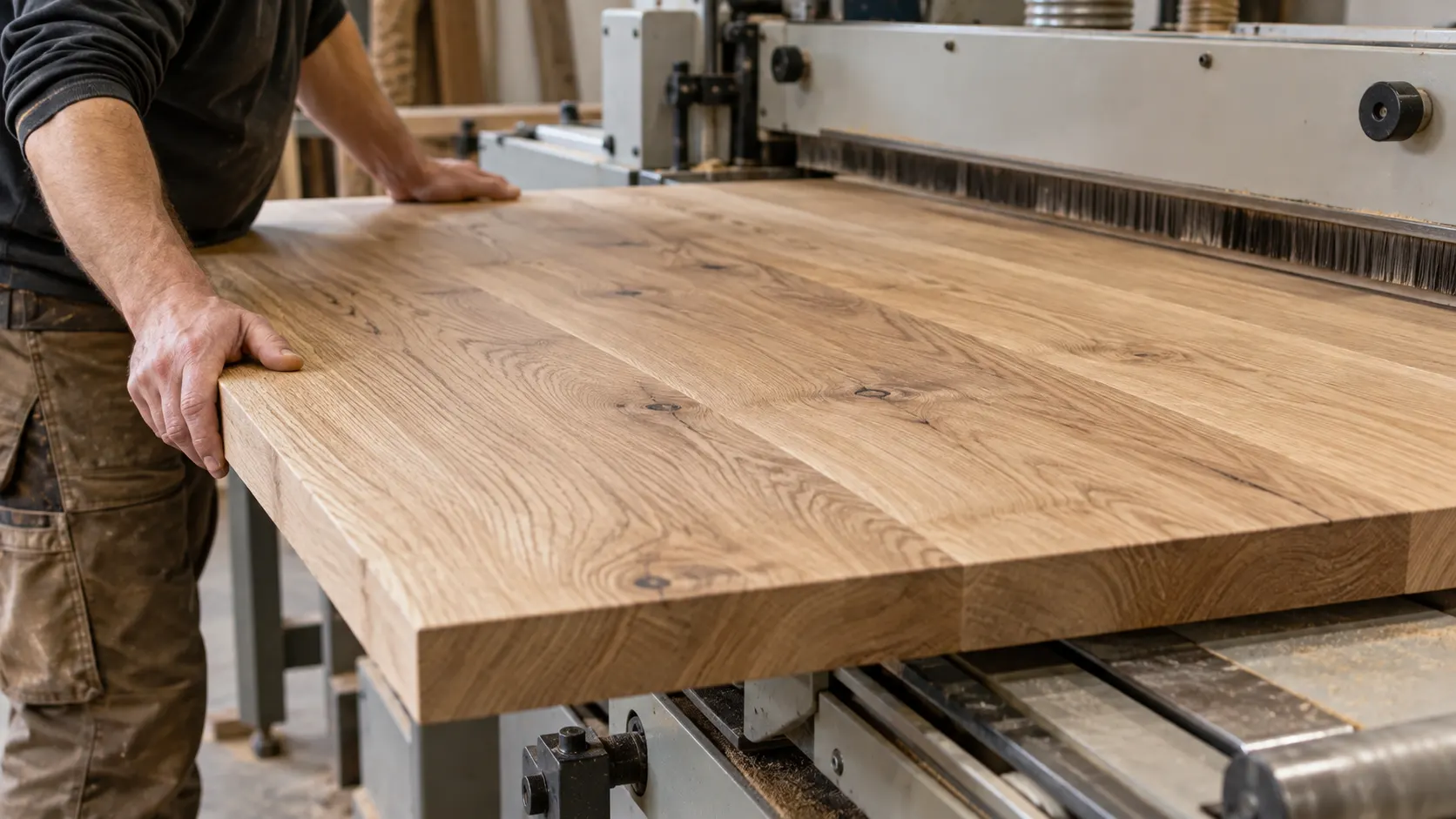
Solid Wood vs. Veneer: Choosing the Right Material for Your Furniture Line
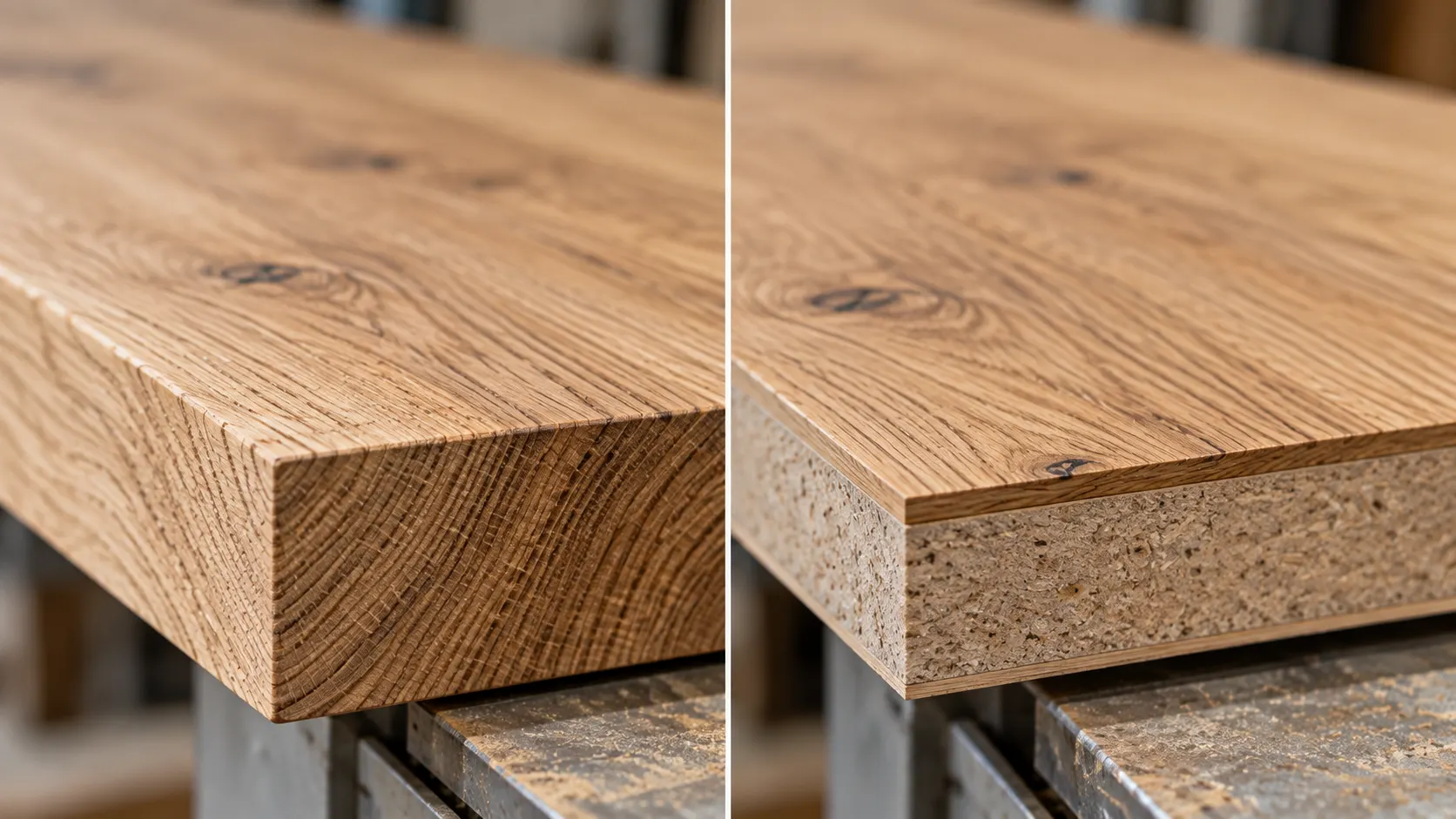
For furniture brands developing a new collection, one of the first material decisions is often solid wood vs. veneer.
There is no universally better option. The right choice depends on the product, dimensions, target price, construction, expected use and what the end customer expects from the furniture.
At BOSA Contract, we work with both solid wood furniture and natural wood veneer, including products where both materials are combined in the same design. This guide explains the practical differences between solid wood and veneer from a furniture manufacturing perspective.
What is solid wood?
Solid wood means the component is produced from natural timber throughout its full thickness.
A tabletop, chair leg or frame component may be made from a single piece of timber or from several solid boards joined together to create a larger panel.
Common species used in furniture production include:
- oak
- ash
- beech
- walnut
- pine
- spruce
For premium furniture, oak is one of the most commonly specified hardwoods because of its strength, grain structure and appearance.
What solid wood gives you
Solid wood has several important advantages in furniture production.
It can be re-sanded and refinished
Because the material is solid throughout, surface damage can often be repaired. Scratches, wear and damaged finish can be sanded back and the component can be re-oiled, stained or lacquered.
This is especially valuable for dining tables, desks, benches, chair arms and other high-contact surfaces. For brands positioning furniture around durability and longevity, this can be an important selling point.
Edges and profiles can be machined freely
Solid wood gives the manufacturer much more freedom when shaping the component. It can be chamfered, rounded, turned, carved, CNC machined, grooved, profiled or joined using traditional woodworking joints.
This makes it suitable for products where visible edge detailing is an important part of the design.
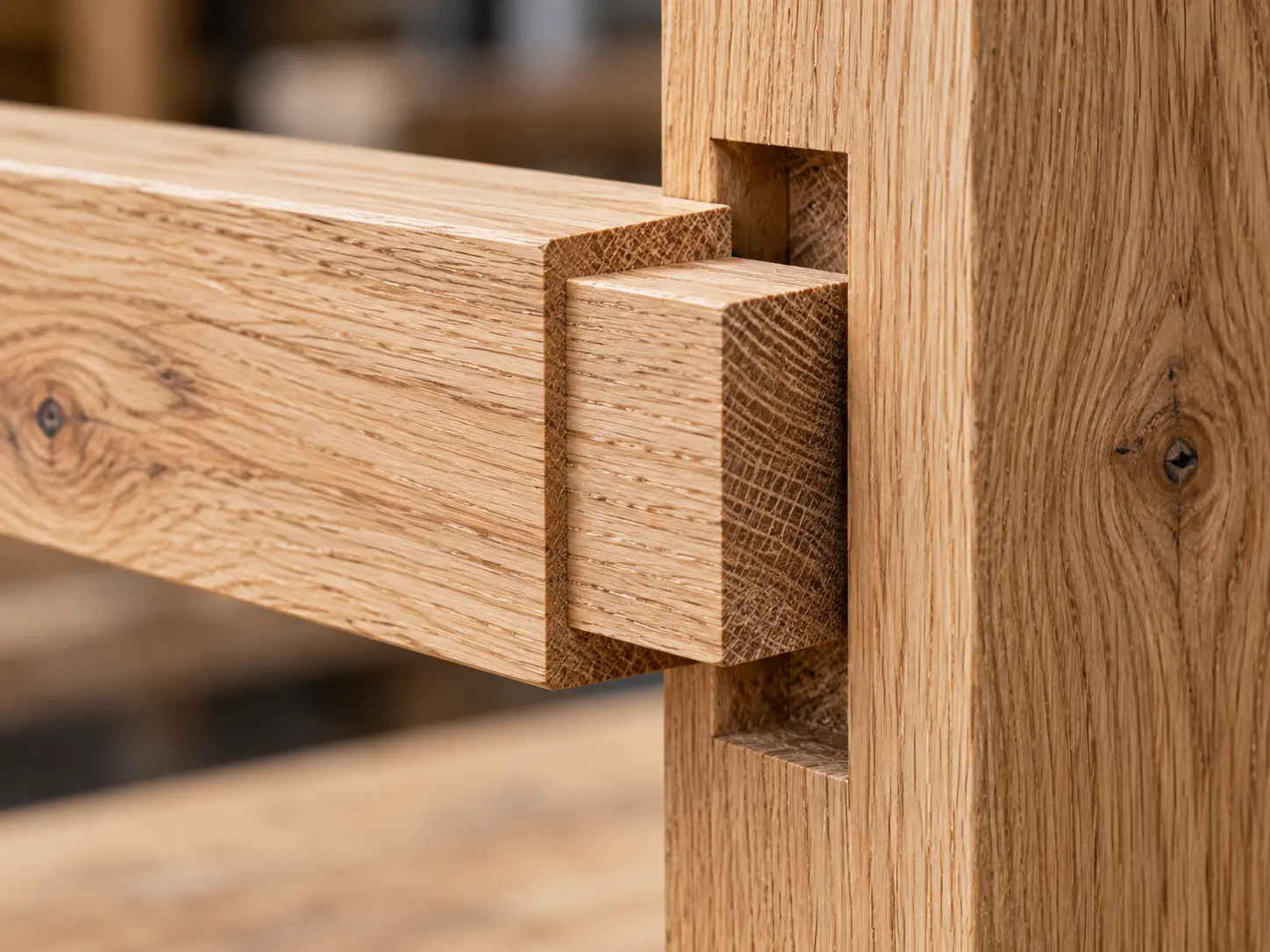
Traditional joinery is easier to use
Solid wood can accommodate joinery methods such as mortise and tenon, dowel joints, finger joints, dovetails and loose tenons. These methods are commonly used in chairs, tables, benches and other furniture where structural strength matters.
It has strong marketing value
“Solid oak” or “solid walnut” is a straightforward specification that furniture brands can communicate directly to customers. For many buyers, solid wood is associated with quality, durability, natural material, craftsmanship and premium furniture — a perception that can support a higher retail price when the overall product quality justifies it.
Disadvantages of solid wood
Solid wood also has limitations that need to be considered during product development.
Higher material cost
Producing large components from solid hardwood generally requires more raw timber than veneer construction. Material grading, drying, cutting losses and defects can also increase the effective cost per finished part.
Greater weight
Solid wood furniture can become significantly heavier than veneered panel construction, which affects packaging, transport, handling, installation and freight cost.
Natural wood movement
Solid wood reacts to changes in humidity — it expands and contracts mainly across the grain. This means wide solid wood panels must be designed so they can move naturally without causing cracks, deformation or stress in the furniture construction. Correct moisture control, joinery and fixing methods are therefore critical.
What is wood veneer?
Wood veneer is a thin layer of real natural wood applied to a stable substrate. The substrate is usually an engineered board such as MDF, plywood, particleboard or blockboard — but the visible surface is still real wood. This is different from laminate or printed decorative foil.
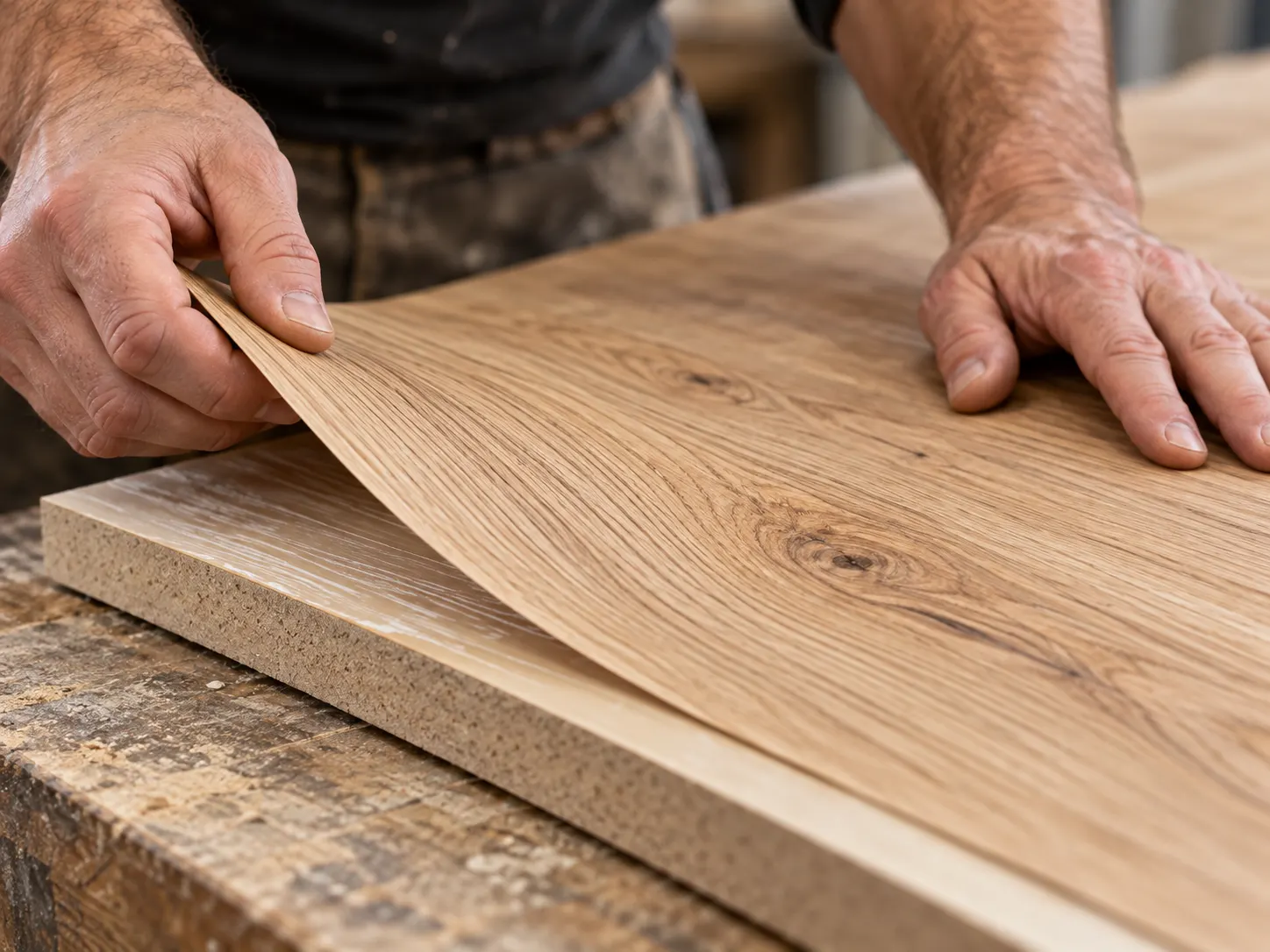
What veneer gives you
Veneer offers several advantages, particularly for large furniture panels.
Better dimensional stability
One of the main benefits of veneer construction is stability. Large solid wood panels move with changes in humidity; a veneered engineered panel is significantly more dimensionally stable. This makes veneer particularly suitable for wardrobe doors, cabinet sides, large drawer fronts, shelving, sideboards, large table bases and wide flat panels.
More efficient use of timber
A single log can produce significantly more surface area when sliced into veneer than when cut into solid boards. This makes veneer especially useful for expensive or visually distinctive wood species.
Consistent grain across large surfaces
Veneer sheets can be selected and arranged to achieve controlled grain patterns — book matching, slip matching, quarter matching and continuous grain matching. This can produce visual effects that would be difficult or inefficient to achieve with solid wood.
Lower weight
Because the core is an engineered board rather than solid hardwood, large furniture pieces can often be produced at a lower overall weight, reducing handling and logistics costs.
Cost efficiency
For large case-good furniture, veneer can significantly reduce material cost while maintaining the appearance of real wood — especially relevant for cabinets, wardrobes, sideboards, shelving systems and large panel furniture.
Disadvantages of veneer
Veneer has its own limitations.
Limited refinishing
Because the visible wood layer is thin, a veneered surface cannot be repeatedly sanded in the same way as solid wood. Aggressive sanding can eventually go through the veneer layer and expose the substrate underneath.
Edge detailing needs more planning
A veneered panel cannot simply be deeply machined into the edge like a solid timber component. Edges usually require matching veneer, solid wood lipping, edge banding or specially designed profiles — this has to be considered during product development.
Damage can be harder to repair
Deep scratches, chipped edges or impact damage can be more difficult to repair than on a solid wood component. Depending on the severity, the damaged veneer may need to be replaced rather than simply sanded.
Solid wood vs. veneer: quick comparison
| Factor | Solid Wood | Wood Veneer |
|---|---|---|
| Material | Natural wood throughout | Thin real wood layer on engineered core |
| Stability | Moves with humidity | More dimensionally stable |
| Weight | Higher | Usually lower |
| Refinishing | Can be sanded repeatedly | Limited sanding |
| Edge machining | Very flexible | Requires edge planning |
| Large flat panels | More difficult | Very suitable |
| Material efficiency | Lower | Higher |
| Cost | Usually higher | Often lower for large panels |
| Traditional joinery | Excellent | Limited |
| Grain consistency | Natural variation | Can be highly controlled |
Where solid wood makes the most sense
Solid wood is generally the better choice when the component will receive heavy direct use, the edges are visible, the design requires shaped profiles, structural joinery is important, the customer expects a premium solid wood specification, or long-term refinishing is desirable.
Typical examples include dining table tops, table legs, chair frames, benches, armrests and structural wooden frames.
Where veneer makes the most sense
Veneer is often the better choice when the component is large and flat, dimensional stability is important, weight needs to be reduced, consistent grain is required, the target cost is lower, or the design uses large surface areas.
Typical examples include wardrobes, cabinet sides, drawer fronts, large shelves, sideboards and large panel furniture.
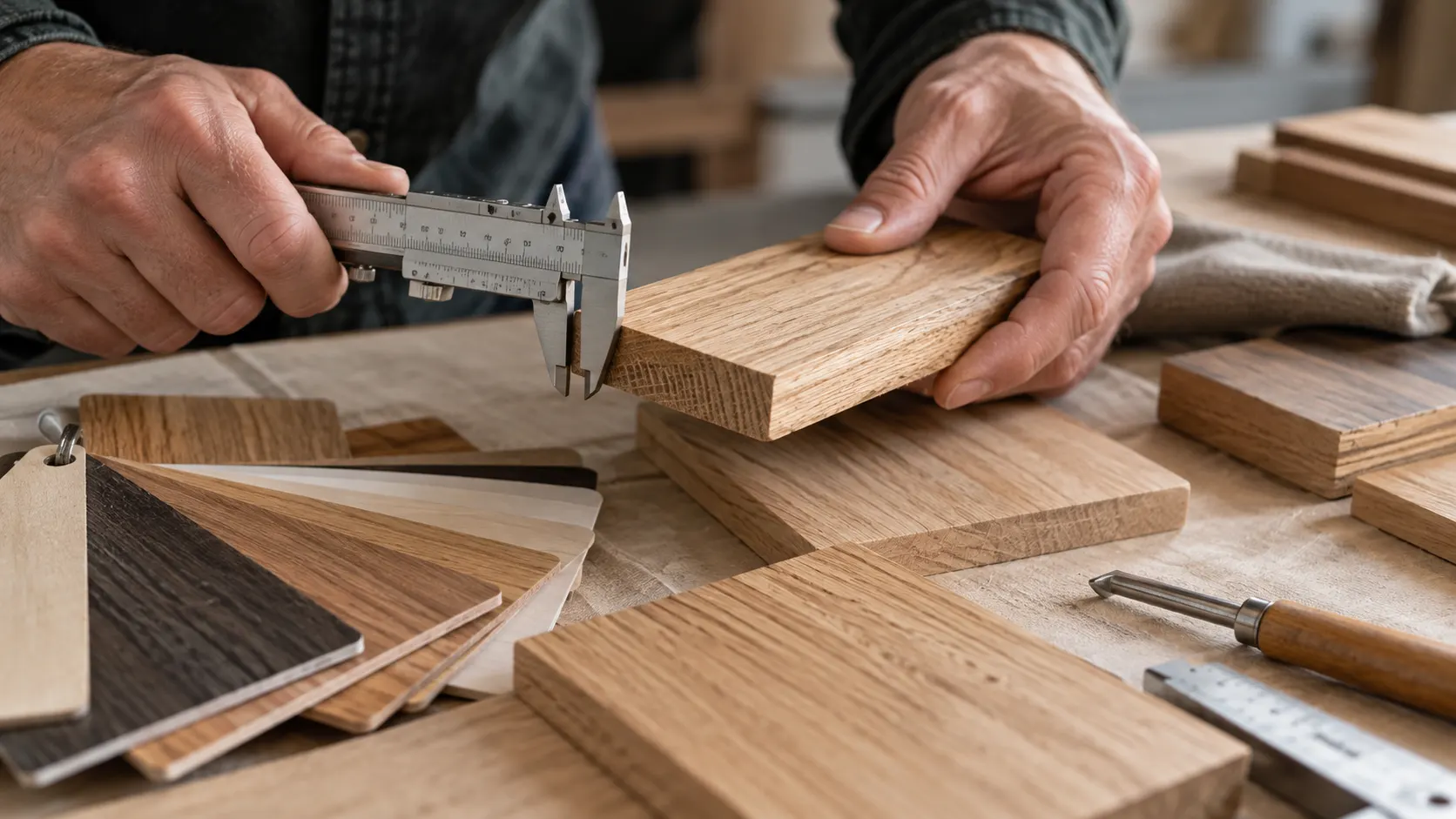
Combining solid wood and veneer
For many furniture programs, the best answer is not solid wood or veneer. It is both.
A dining table, for example, might use solid oak legs, solid oak edge details, veneered structural panels, and a solid or veneered tabletop depending on design and price point.
A cabinet might use veneered side panels, veneered doors, solid oak handles, solid wood edge details and solid wood legs.
Using each material where it performs best can improve cost, stability and product quality without compromising the design.
How we help clients choose
When reviewing a new OEM furniture project, we usually consider several questions.
1. How will the component be used?
Surfaces receiving direct wear, such as dining table tops, chair seats and armrests, may benefit from solid wood. Large decorative panels often benefit from veneer.
2. How large is the component?
The larger and wider a flat panel becomes, the more important dimensional stability becomes — this often makes veneer the better technical choice.
3. What is the target retail price?
Material selection can have a major impact on manufacturing cost. A fully solid wood cabinet may not make commercial sense if the product needs to hit a mid-market retail price.
4. What finish is required?
Both solid wood and veneer can be stained, lacquered or oiled, but the substrate and edge treatment need to be considered.
5. What is the expected production volume?
For larger production runs, material efficiency becomes increasingly important. Veneer can reduce timber usage and improve consistency across batches.
Solid wood and veneer furniture manufacturing
At BOSA Contract, we support furniture projects using both solid wood and natural veneer. Depending on the project, production can include solid oak components, solid ash and beech components, natural oak veneer, veneered panels, CNC-machined components, solid wood edging, mixed-material furniture construction, OEM furniture development and private-label production.
Clients can send us technical drawings, CAD files, samples or product specifications. We can then evaluate whether solid wood, veneer or a mixed construction is the most practical solution.
Frequently Asked Questions
Is veneer real wood?
Yes. Natural wood veneer is a thin layer of real wood bonded to a stable substrate. It should not be confused with laminate or printed wood-effect surfaces.
Is solid wood always better than veneer?
No. Solid wood is better for certain applications, while veneer is technically superior for others, particularly large flat surfaces where dimensional stability is important.
Is veneer cheaper than solid wood?
Often, yes, especially for large panels. However, cost depends on the wood species, veneer grade, substrate, surface finish and production requirements.
Can veneer furniture look premium?
Yes. High-quality natural veneer is widely used in premium furniture because it allows consistent grain selection, large surfaces and visually controlled patterns.
Can solid wood and veneer be used in the same product?
Yes. Combining solid wood and veneer is common in furniture manufacturing and is often the best balance between durability, stability, appearance and cost.
Which material is better for dining tables?
It depends on the design. Solid wood is often preferred for premium dining table tops because of its tactile quality and ability to be refinished. Veneered table tops can be a better solution where lower weight, dimensional stability or tighter cost control is required.
Need help choosing the right material?
If you are developing a furniture collection and are unsure whether a component should be made from solid wood, veneer or a combination of both, send us the technical drawing or product specification. We can review the construction, manufacturing method and target quantity and recommend the most practical solution.
Need a manufacturing partner?
Tell us your product specification and target volume — we reply within 1 business day.
Request a quote →