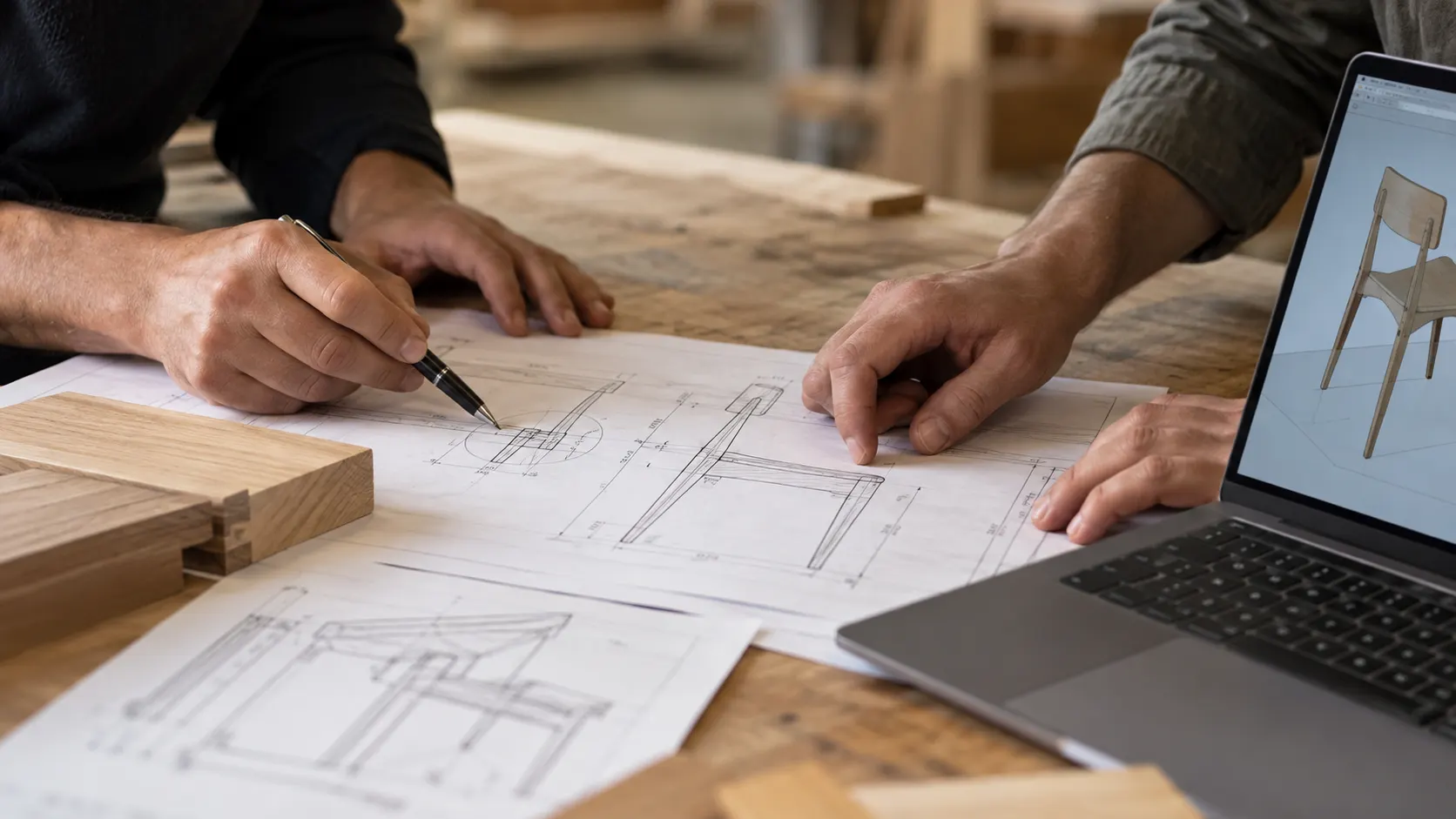
How We Produce Solid Oak Table Tops: From Raw Lumber to Finished Surface
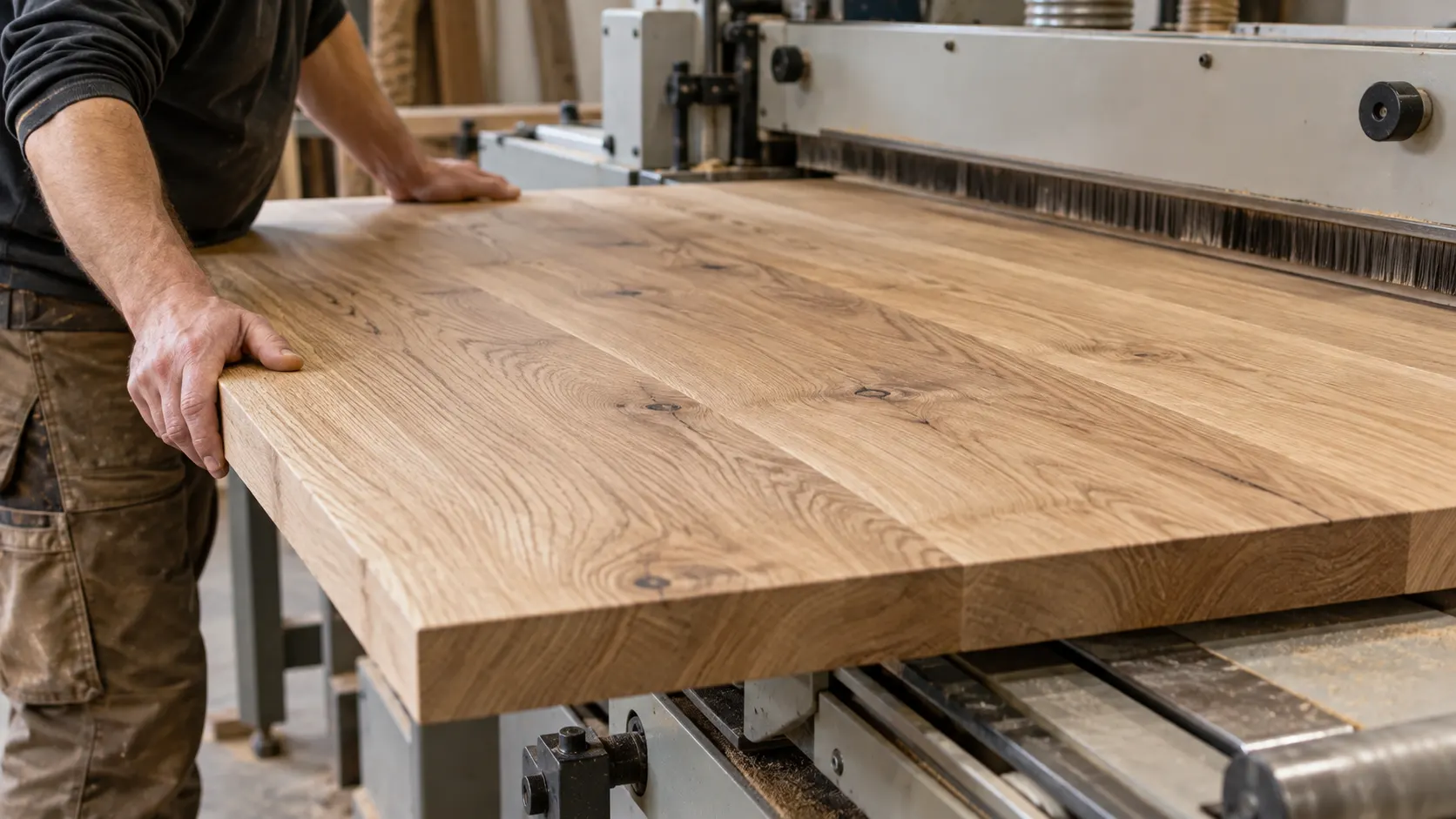
A finished solid oak table top looks simple: flat, smooth, stable and consistent.
Producing one properly is not simple. A high-quality table top depends on controlled moisture, correct timber selection, accurate machining, stable panel construction and careful finishing. If any of those stages are rushed, the result can be warping, open glue lines, surface defects or movement after delivery.
This is how we approach solid oak table top production for custom furniture and OEM projects.
1. Selecting the right oak lumber
Production starts with kiln-dried European oak. The boards are selected according to the specification of the project.
Depending on the furniture collection, this may include requirements for:
- oak grade
- knot content
- sapwood allowance
- grain structure
- colour variation
- board width
- board thickness
- visible natural characteristics
A rustic table top may intentionally include knots and stronger colour variation. A cleaner premium collection may require much stricter board selection.
The goal is not simply to find boards without defects. It is to select timber that will machine well, remain stable and create a visually balanced final panel. Boards with significant structural defects, insect damage or unstable grain are rejected before machining.
2. Moisture control
Moisture content is one of the most important variables in solid wood furniture production. Wood continues to react to humidity even after the furniture has been manufactured.
If oak enters production with excessive moisture, it may shrink after delivery, which can cause gaps, cracks, distortion, loose joints or changes in panel dimensions.
For indoor furniture, oak is typically prepared to a controlled moisture range suitable for the destination market. For many European furniture projects, this is approximately 8–12%, depending on specification and environmental conditions.
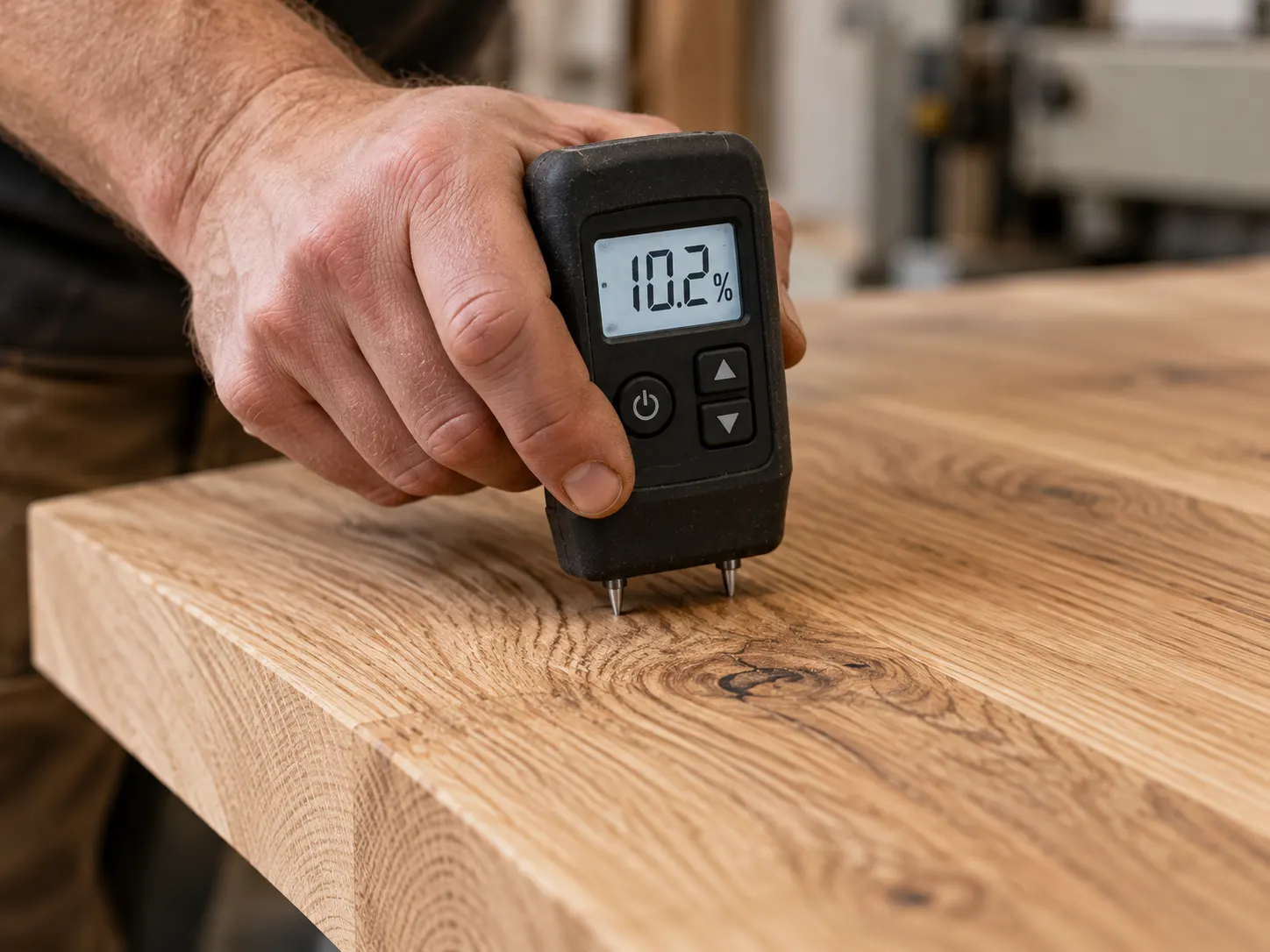
Moisture is checked before critical production stages rather than relying only on the kiln-drying specification. Correct moisture does not eliminate natural wood movement, but it significantly reduces the risk of problems after delivery.
3. Preparing the boards
Before the table top can be glued into a larger panel, the individual oak boards need to be prepared. This typically includes cutting to rough length, straightening, thickness preparation, jointing the edges, removing unsuitable sections and sorting boards by colour and grain.
The boards are then laid out next to each other before gluing. This stage is visually important — poor board matching can make a technically correct table top look like a random collection of unrelated pieces. For higher-quality products, grain direction, colour and natural characteristics are considered before final assembly.
4. Panel joining
Most solid oak dining table tops are wider than a single board. Several solid oak boards are therefore joined edge-to-edge to create one larger panel.
The prepared edges must be straight and accurate before adhesive is applied. The boards are positioned according to the selected grain layout and placed under controlled clamping pressure.
Important variables include adhesive selection, joint preparation, clamping pressure, panel alignment, curing time and workshop conditions. The panel must remain under the required pressure for the correct curing period before further machining. After curing, the panel is calibrated to achieve consistent thickness and a flat surface.
5. CNC machining
Once the glued panel is stable and at the correct thickness, it can be machined to its final geometry.
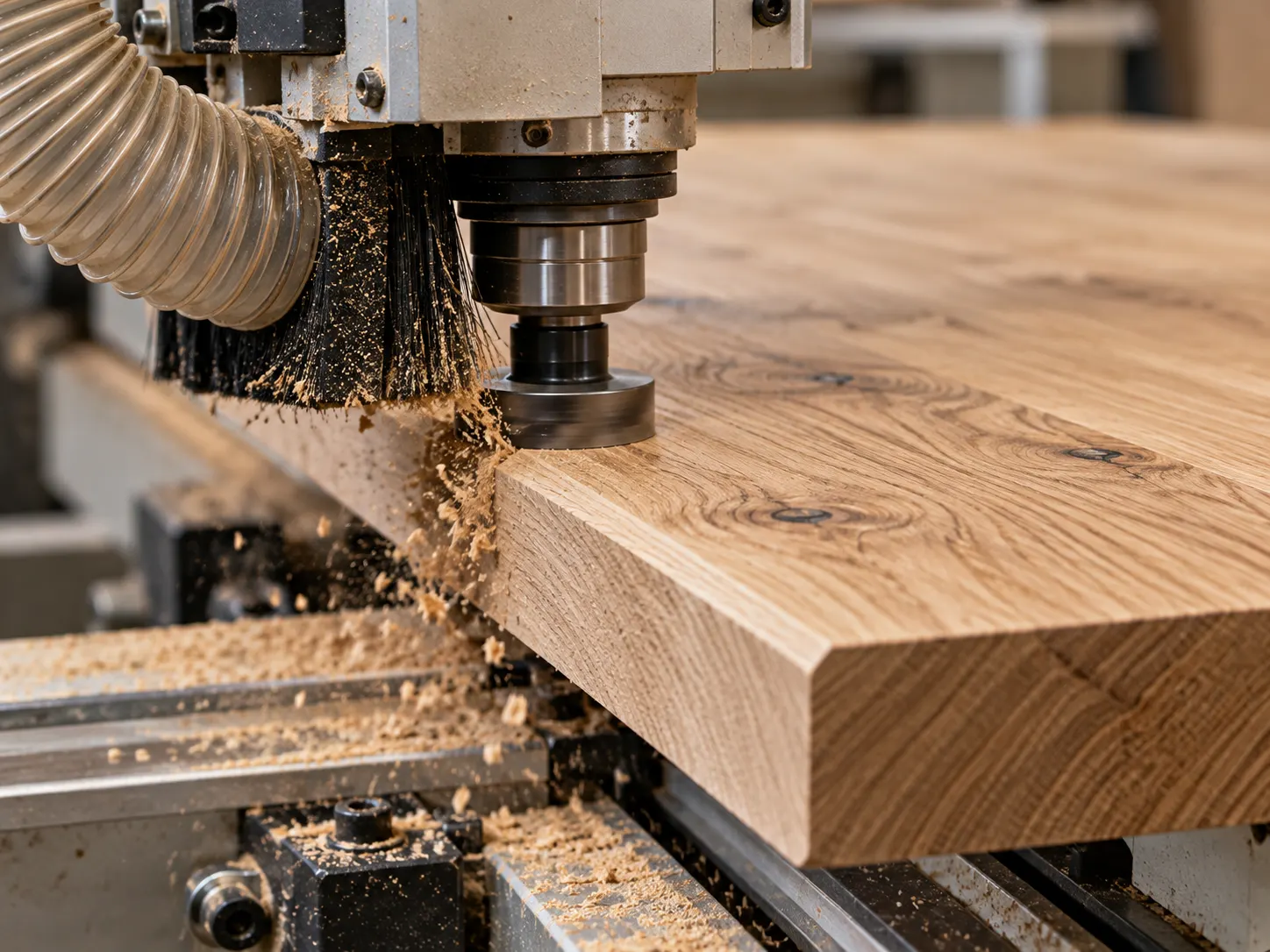
Depending on the design, CNC machining may include final external dimensions, round or oval shapes, radius corners, chamfered edges, bevelled profiles, underside recesses, mounting holes, threaded insert positions, cable openings and custom connection details.
For OEM furniture production, machining is based on the customer’s technical drawings or CAD data.
This stage also allows the construction to account for natural solid wood movement. A wide oak panel should not always be fixed completely rigidly to the base — the fixing method needs to allow controlled seasonal movement where required by the design.
6. Sanding and surface preparation
Machining determines the shape of the table top. Sanding determines how the finished surface will look and feel.
The panel moves through progressive sanding stages to remove machining marks, glue residue, scratches, uneven transitions and minor surface imperfections. Both machine sanding and manual sanding may be used, with manual finishing particularly important around edges, corners, chamfers, radii and detailed profiles.
The final sanding specification also depends on the selected finish — an oil finish and a lacquered finish may require different preparation.
7. Surface finishing
The surface treatment affects both appearance and performance. Typical options for oak table tops include natural oil, hardwax oil, clear lacquer, matt lacquer, stained oak, dark oak finishes and custom colours based on approved samples.
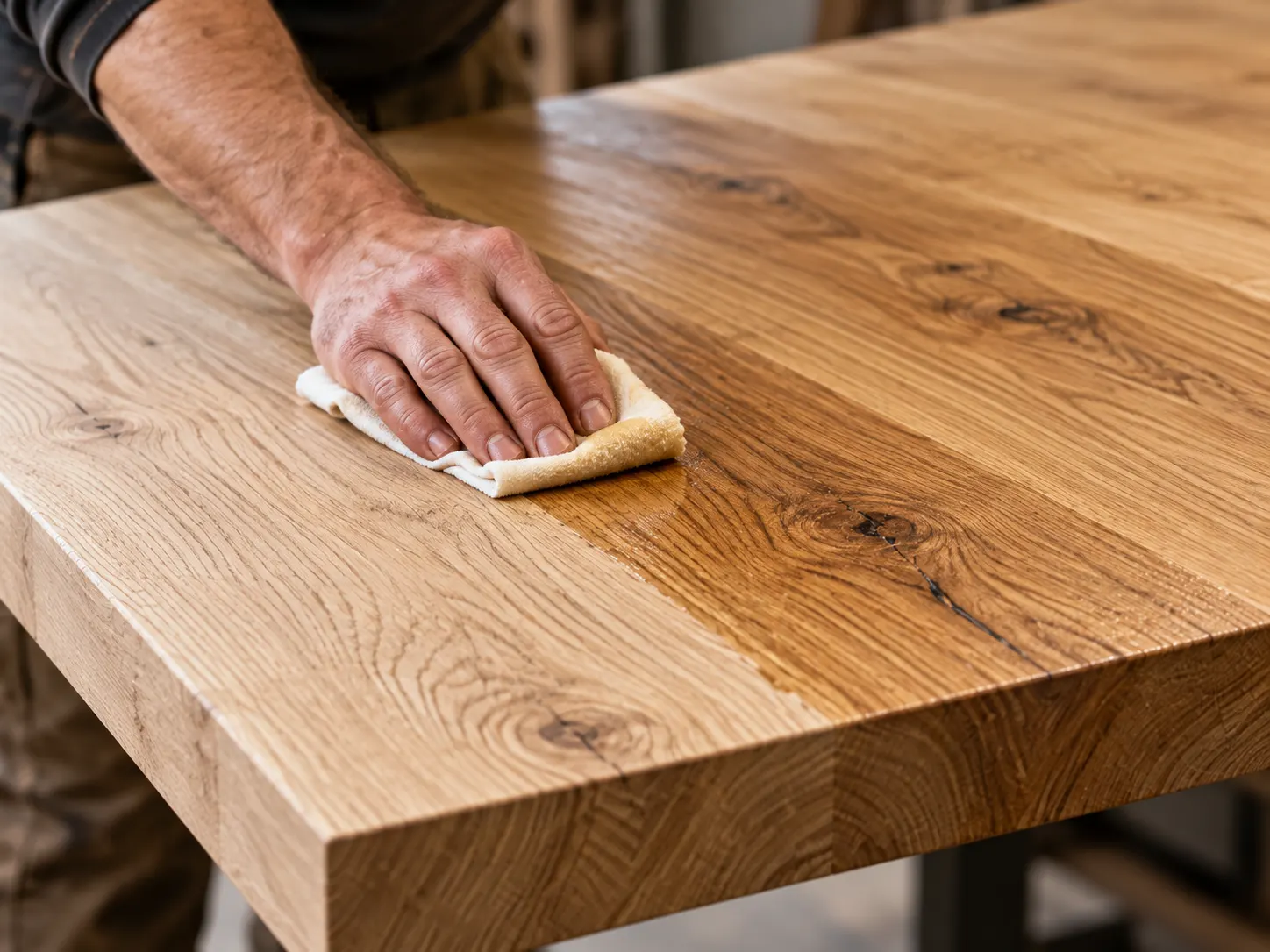
Oil and hardwax-oil finishes highlight the natural texture and grain of oak. Lacquer systems can provide a more sealed surface and may be preferred where specific durability or maintenance requirements apply.
For custom furniture programs, a finish sample should ideally be approved before series production. This helps define colour, gloss level, grain appearance, tactile feel and acceptable variation.
8. Final quality inspection
Before packing, each table top should be inspected against the production specification. Depending on the project, final quality control can include dimensions, thickness, flatness, surface quality, edge profile, colour consistency, finish consistency, CNC details, drilling positions, threaded inserts and visible defects.
For a new OEM furniture project, the approved prototype or reference sample can be used as the quality benchmark for series production.
9. Packing for export
Large solid wood table tops require careful packaging. The most vulnerable areas are typically corners, edges, finished surfaces and mounting points.
Depending on the order, packaging can include protective foam, cardboard, individual cartons, corner guards, palletization, stretch film and custom labelling.
For export shipments from Bosnia and Herzegovina to European markets, packaging needs to withstand road freight, handling and warehouse operations. The objective is straightforward: the table top should arrive in the same condition in which it left production.
Why solid oak table top production requires experience
A table top is one of the simplest-looking furniture components. It is also one of the easiest to get wrong.
Large solid wood surfaces react strongly to poor moisture control, incorrect board selection and bad construction details. Common problems include warping, cupping, cracking, open glue lines, uneven finishing, visible colour mismatch and movement around fixings.
Most of these problems are easier to prevent during production than to repair after delivery. For furniture brands, this is why supplier selection should be based on more than the quoted price per table top — the production process matters.
Custom solid oak table tops for OEM furniture projects
BOSA Contract supports custom furniture production using solid oak and other hardwoods.
Projects can start from technical drawings, CAD files, STEP files, existing samples, dimensions, photographs or finish references.
Depending on the specification, table top production can include rectangular table tops, round table tops, oval table tops, coffee table tops, dining table tops, custom edge profiles, CNC details, threaded inserts and custom surface finishes.
For new products, we recommend producing a sample before starting a larger production run. This allows both sides to confirm the dimensions, construction, colour and finish before series production.
Frequently Asked Questions
What moisture content should solid oak have for furniture production?
There is no single number for every market, but indoor furniture oak is commonly prepared around the 8–12% range depending on destination, specification and environmental conditions.
Can solid oak table tops warp?
Yes. Solid wood naturally expands and contracts with humidity. Correct drying, board selection, panel construction and fixing methods significantly reduce the risk of excessive movement.
How thick should a solid oak dining table top be?
It depends on the design. Common furniture table tops may fall around 25–40 mm, but thinner or thicker constructions are possible depending on span, base design and visual requirements.
Can you produce custom table top dimensions?
Yes. Custom dimensions, profiles and CNC details can be evaluated from technical drawings or CAD files.
Can threaded inserts be installed in solid oak table tops?
Yes. Threaded inserts and other mounting details can be incorporated according to the technical specification.
What finishes can be applied to oak table tops?
Common options include natural oil, hardwax oil, clear lacquer, matt lacquer and custom stained finishes.
Looking for a solid oak table top manufacturer?
If you are developing a furniture collection and need custom solid oak table tops, send us your drawings, dimensions, required oak grade, finish and estimated quantity. We can review the design for manufacturability, prepare a sample and quote the project based on the actual specification.
Need a manufacturing partner?
Tell us your product specification and target volume — we reply within 1 business day.
Request a quote →