How to Find a Reliable Furniture Manufacturer in Europe
Finding a furniture manufacturer is straightforward. Finding one you can build a long-term sourcing relationship with is considerably harder.
A manufacturer may quote well, communicate promptly and send an impressive catalogue — and still deliver inconsistently, lack the technical capability to handle your product, or fail at the export stage. The difference between a reliable manufacturing partner and a difficult one often becomes visible only after the first production run.
This guide covers what to look for when evaluating a furniture manufacturer in Europe, and what questions to ask before committing to series production.
1. Look for Relevant Production Experience
Not all furniture manufacturers produce the same types of products.
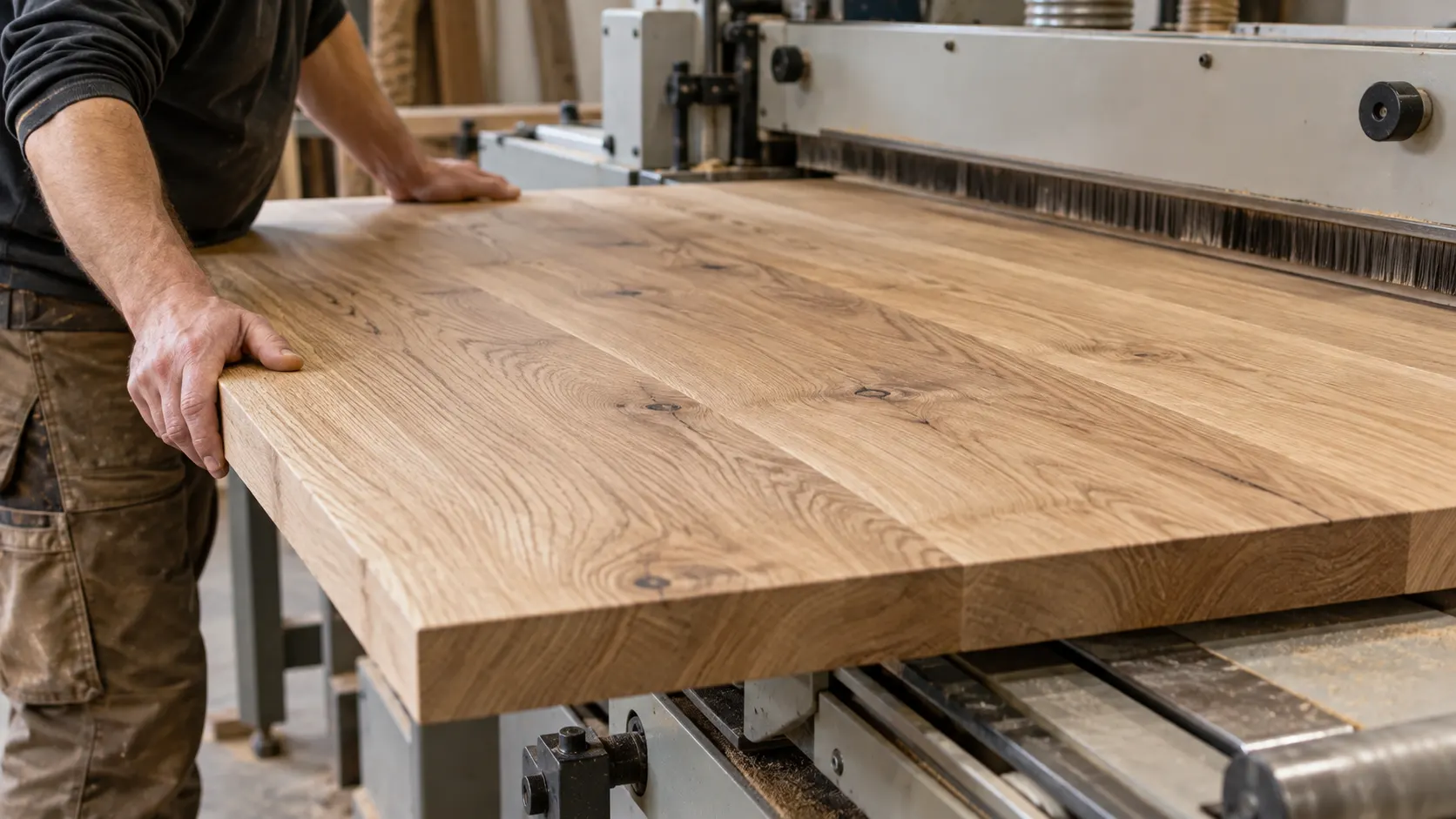
A factory that produces upholstered dining chairs may have no experience with solid wood construction. A manufacturer strong in flat-pack cabinet components may not be set up for the tolerances and hand finishing required for a premium solid wood table.
Before evaluating price or lead time, confirm that the manufacturer has genuine experience producing the type of product you need. Ask for:
- photographs of comparable products they have manufactured
- the names of materials and finishes they regularly work with
- information about their machinery and production processes
A manufacturer with the right experience will answer these questions in detail. One without it will give vague or generic responses.
2. Evaluate Their Material Knowledge
Material selection is one of the most important decisions in furniture manufacturing, and it requires genuine expertise.
Wood species, wood grade, moisture content, finishing systems, hardware specifications — each of these has consequences for the appearance, durability and cost of the finished product. A manufacturer who understands materials can advise you on the right choices for your design and target price. One who does not will simply order what you specify, and the results may disappoint.
Practical questions to ask:
- What wood species do you work with regularly?
- How do you manage moisture content during production?
- What finishing systems do you use, and what are their durability characteristics?
- Can you provide material samples or finish references before production?
The quality of the answers tells you a great deal about the factory’s actual depth of knowledge.
3. Request a Technical Drawing Review
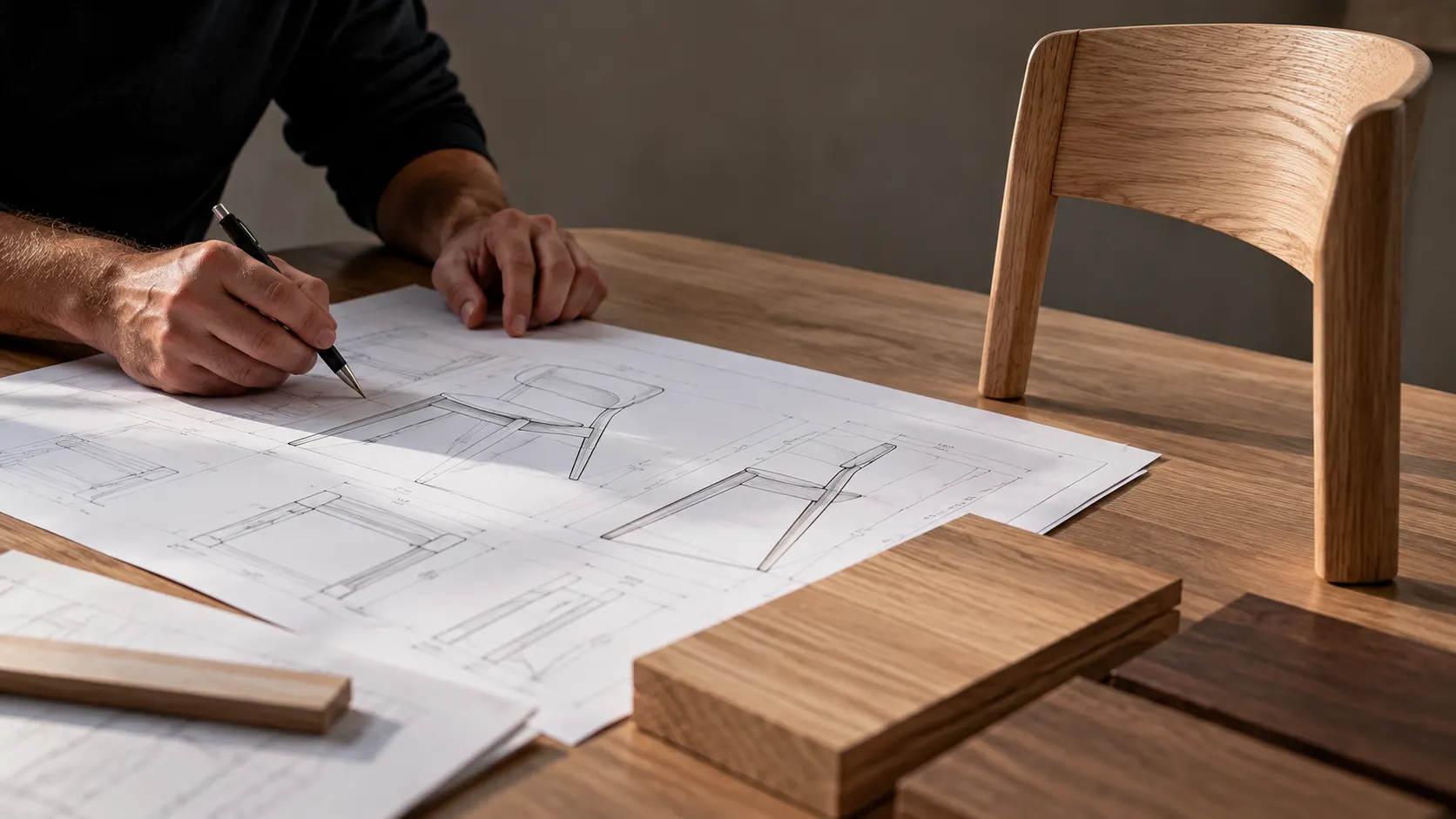
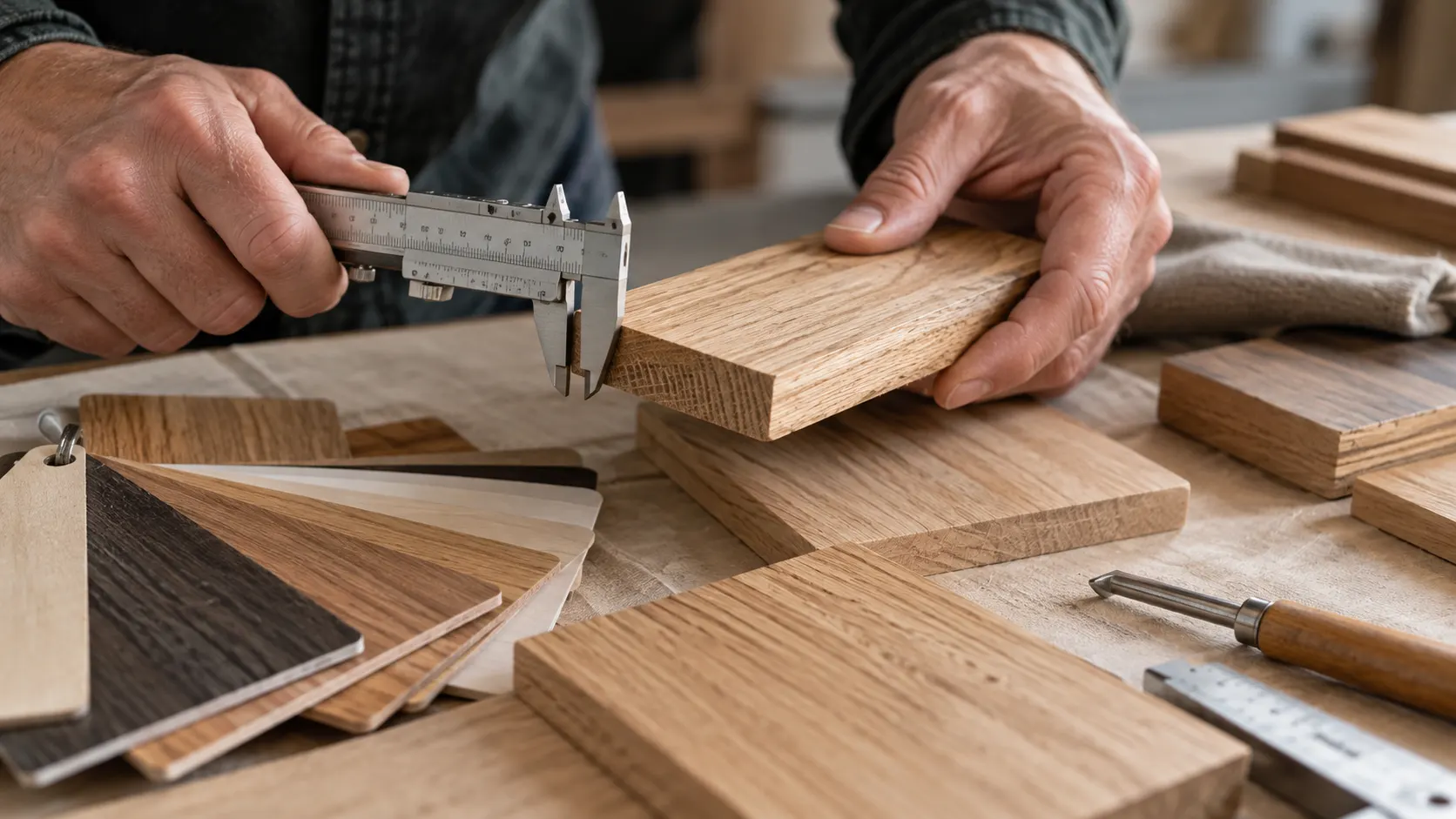
Before committing to production, ask the manufacturer to review your technical drawings or product specifications.
A capable manufacturer will identify potential production issues — corner radii that cannot be machined, tolerances that are unrealistic, joint constructions that will not hold — and suggest changes. This design-for-manufacturing review is a standard service at experienced factories.
If a manufacturer accepts your drawings without any feedback or questions, that can be a warning sign. Either they have not reviewed them carefully, or they lack the technical understanding to identify problems.
A useful review process should cover:
- whether the product can be machined with standard tooling
- whether joint constructions are appropriate for the intended use
- whether tolerances are achievable in series production
- whether the design can be assembled efficiently at volume
4. Understand Their Minimum Order Quantities
MOQ matters more than it appears.
Some manufacturers quote attractively but have minimum order quantities that do not match the volumes a brand needs at the early stages of a product launch. Others have low MOQs for standard products but high minimums for custom constructions or finishes.
Ask specifically:
- What is the MOQ per model for your standard production?
- What is the MOQ for custom dimensions, finishes or hardware specifications?
- Can we start with a smaller pilot order before committing to larger volumes?
A manufacturer willing to work with you on a small initial order — even at a higher unit cost — is usually more interested in building a long-term relationship than one who insists on large volumes from the first conversation.
5. Ask About Lead Times and Production Planning
Lead time is one of the most common sources of friction in furniture sourcing.
Manufacturers may quote an optimistic lead time during the sales process that does not reflect their actual capacity. Ask for specific lead times at different order volumes, and ask what factors can affect them.
Important questions:
- What is the production lead time for a sample order?
- What is the production lead time for a series order of X units?
- How far in advance do you need to book production capacity?
- What happens to lead times during your peak production periods?
Also ask about their process for communicating production status. Regular updates — at intake, mid-production and pre-shipment — are standard at well-organised factories.
6. Review Quality Control Procedures
Quality control is one of the clearest indicators of how a manufacturer is organised.
A factory with no documented QC process is relying on individual judgement at each stage. That may produce acceptable results most of the time, but it makes consistency between batches harder to guarantee. For brands buying repeatedly at volume, batch-to-batch consistency is critical.
Ask about:
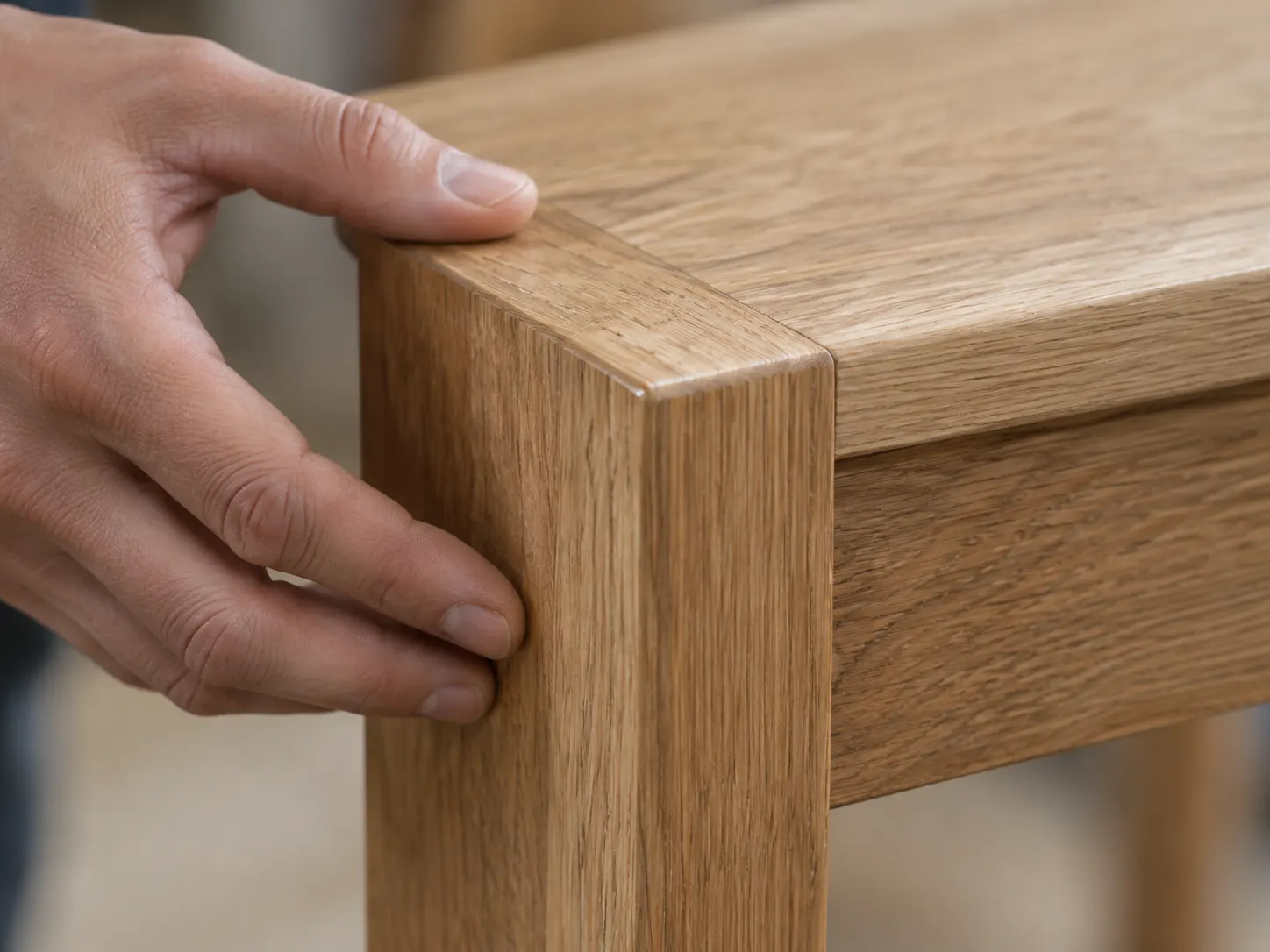
- how dimensions and tolerances are checked during production
- how surface quality and finish consistency are verified
- whether finished products are inspected against a reference sample before packing
- whether they retain reference samples between orders
7. Check Export and Logistics Experience
A manufacturer who produces good furniture but has limited export experience can create significant problems at the logistics stage.
Important considerations include:
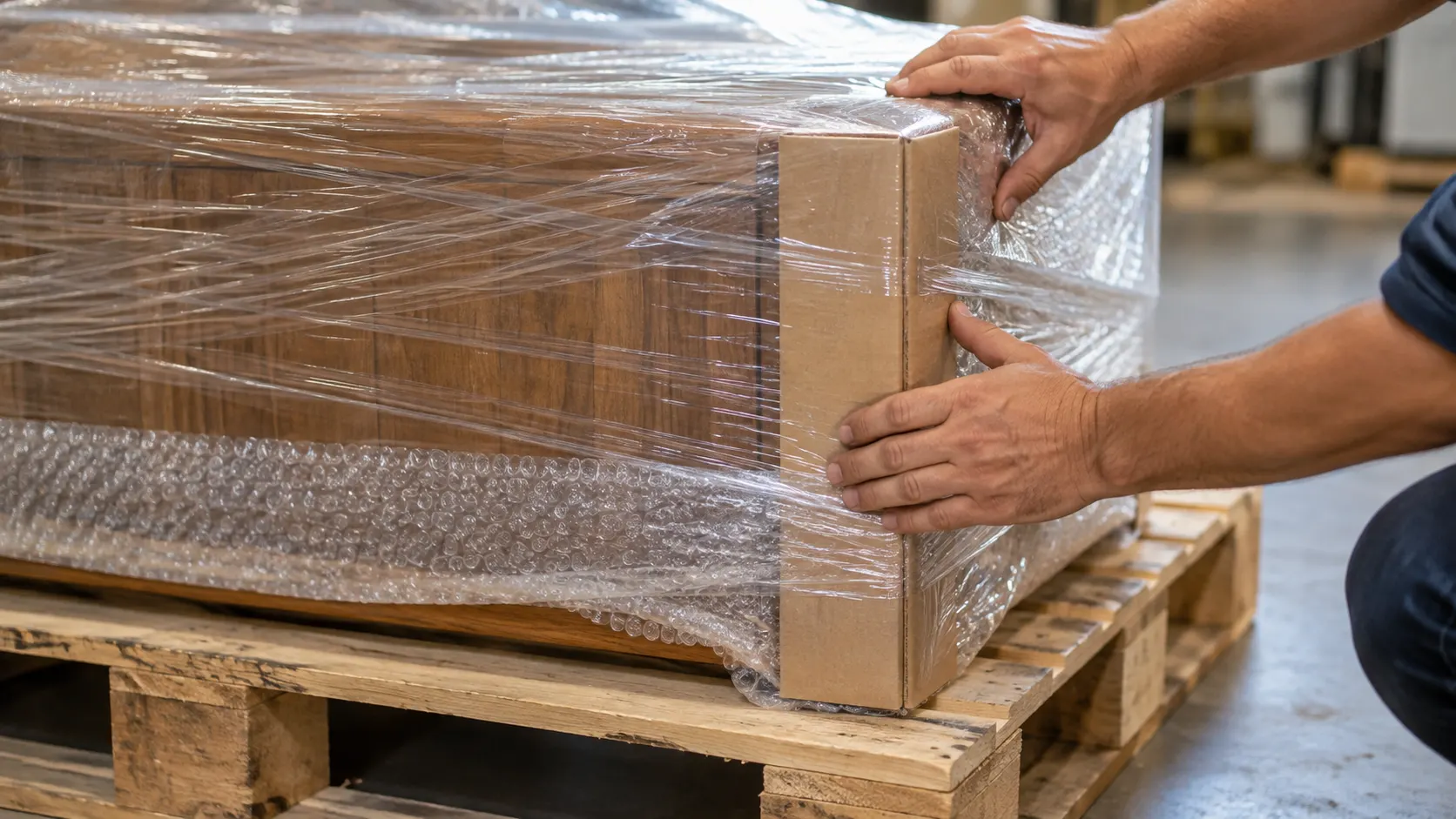
- Export packaging: is the product packaged to survive international transport, not just local delivery?
- Documentation: can the manufacturer provide accurate commercial invoices, packing lists, certificates of origin and other documents required for customs clearance?
- Incoterms: do they have experience with EXW, FCA and DAP shipments?
- Palletisation: are products palletised to EPAL standards compatible with European logistics?
Ask to see examples of their export packaging, and ask which countries and logistics providers they have worked with. A manufacturer who regularly ships to Germany, the Netherlands or Scandinavia will be familiar with the requirements of European buyers.
8. Visit the Factory Before Series Production
No amount of remote communication replaces a factory visit.
A visit tells you things that photographs and emails cannot: the actual scale of the operation, how organised the production floor is, the condition of the machinery, the skill level of the workforce and the culture of the management team.
If a factory visit is not possible before the first order, at minimum:
- request a video call or virtual factory tour
- ask for photographs of the production floor and machinery
- ask for references from existing buyers
A manufacturer who is reluctant to show you their facility is a manufacturer worth being cautious about.
9. Prototype Before Series Production
Always build at least one prototype before committing to series quantities.
A prototype reveals how the manufacturer interprets your drawings, the actual quality level of their work, and any production issues that were not visible at the design stage. It also gives you a reference sample against which subsequent production can be measured.
The cost of a prototype is always less than the cost of a failed production run.
Be specific when commissioning a prototype:
- provide complete drawings and material specifications
- specify the finish reference you want matched
- define the dimensions and tolerances that matter most
- request that the prototype be photographed in detail before shipping
10. Evaluate Communication and Responsiveness
Communication quality is a proxy for how a manufacturer handles problems.
A manufacturer who responds promptly, asks intelligent questions and communicates proactively when something changes is almost certainly better organised than one who takes days to reply, provides vague answers or goes silent when there is a problem.
Pay attention to:
- how quickly they respond to your initial enquiry
- the quality and specificity of their responses
- whether they ask useful questions or simply wait for instructions
- how they handle your questions about production problems or delays
Good communication does not guarantee good manufacturing. Poor communication almost always signals broader organisational problems.
Frequently Asked Questions
How do I know if a manufacturer in Bosnia and Herzegovina meets European quality standards?
Bosnia and Herzegovina is a major furniture exporter to the EU. Many Bosnian manufacturers already supply established European furniture brands and meet the same technical, quality and documentation requirements as manufacturers within the EU. Ask for references from existing European buyers and request samples before committing to production.
What is a reasonable MOQ for a custom solid wood furniture product?
For custom solid wood furniture produced in the Western Balkans, MOQs of 50–100 units per model are typical for series production. Smaller pilot orders of 10–20 units are often possible at the prototype or first-batch stage, usually at a higher unit cost.
How much should I budget for prototype development?
Prototype costs vary widely depending on complexity. A simple solid wood component may cost a few hundred euros; a complex upholstered chair with custom hardware could be significantly more. The prototype cost is almost always recoverable over the first production run and should be seen as a qualification investment rather than an expense.
Should I work with a sourcing agent or go directly to a manufacturer?
Both approaches work. A sourcing agent can help you navigate unfamiliar markets and manage relationships across multiple suppliers. Going direct to a manufacturer gives you more control over the relationship and typically lower unit costs once the relationship is established. The right choice depends on your volume, internal capacity and how many suppliers you need to manage.
What certifications should a reliable European furniture manufacturer hold?
Relevant certifications depend on the product and destination market. Common ones include FSC or PEFC for responsible timber sourcing, CE marking for relevant product categories, and compliance with EU REACH regulations for chemical substances in finishes and adhesives. Ask specifically about the certifications relevant to your product type and target market.
Finding the right manufacturing partner takes time. But a good relationship — built on clear communication, technical alignment and consistent quality — is one of the most valuable assets a furniture brand can have.
If you are evaluating manufacturing options for a furniture project, we are happy to answer questions and review your specifications. Send us your drawings, material requirements and target quantities, and we will give you a clear picture of what we can produce and on what terms.
Need a manufacturing partner?
Tell us your product specification and target volume — we reply within 1 business day.
Request a quote →