From Technical Drawing to Finished Furniture: Our Production Process
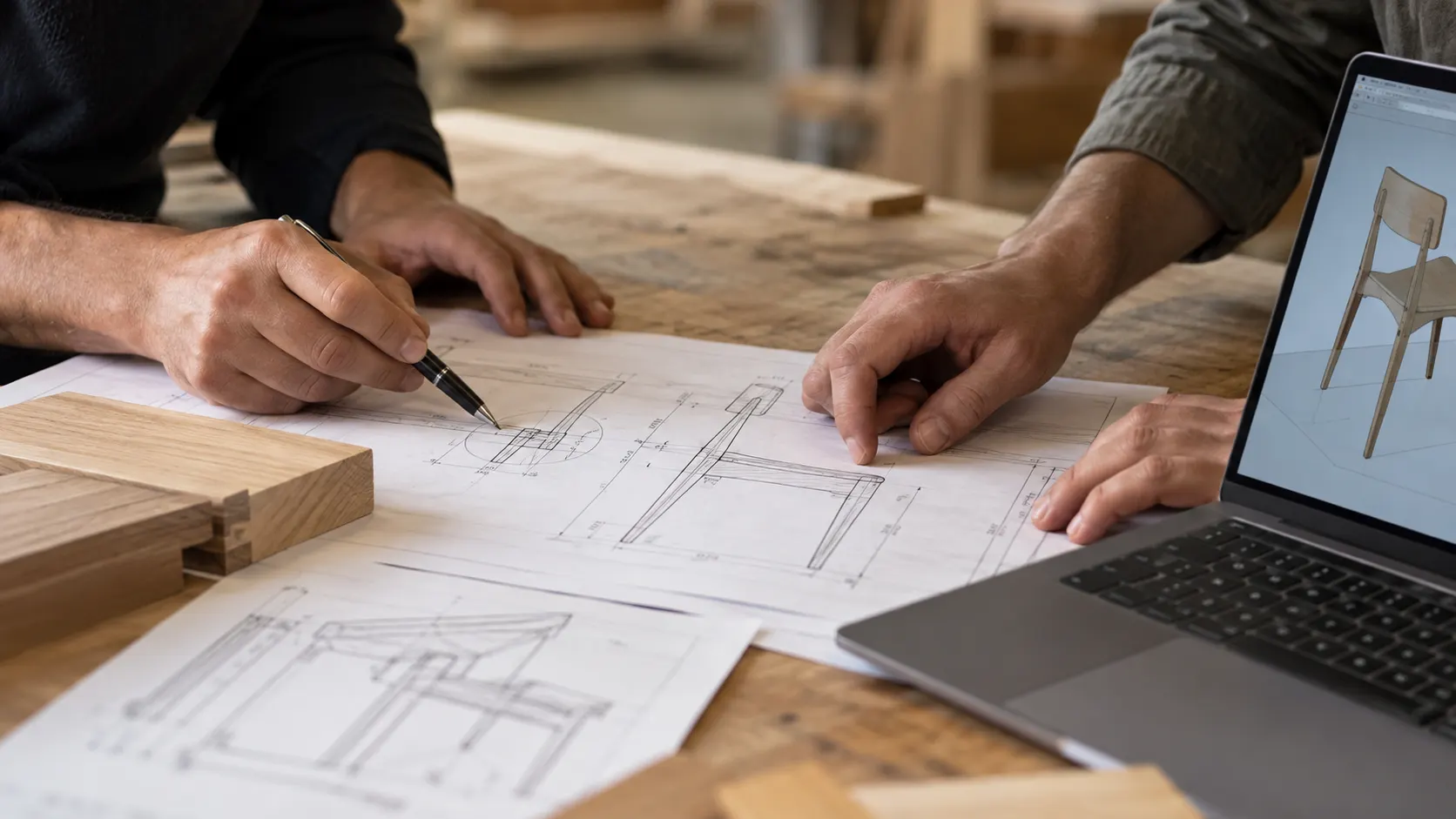
Most custom furniture projects begin with a drawing.
Turning that drawing into a finished product requires much more than simply cutting wood according to dimensions. Material selection, machining strategy, tolerances, joints, finishing, quality control and packaging all need to be considered before series production can begin.
At BOSA Contract, we work with furniture brands, designers and distributors to turn technical concepts into manufacturable furniture products. Here is how the process typically works.
1. Technical Drawing Review
The first stage is understanding the product.
Clients may provide PDF drawings, CAD files, STEP or DXF files, sketches, reference photographs or material specifications. Before quoting or manufacturing, the construction is reviewed from a production perspective.
Key questions at this stage include:
- Can the part be machined with standard tooling?
- Are the material thicknesses suitable for the application?
- Are joints strong enough for the intended use and weight class?
- Are tolerances realistic for series production?
- Can CNC tools physically reach all required areas?
- Are inside corners designed with an appropriate radius?
- Can the product be assembled efficiently at volume?
A design may look entirely correct on screen but still require small adjustments before it becomes production-ready.
2. Design for Manufacturing
One of the most valuable parts of prototype development is identifying features that can be simplified without changing the appearance or function of the product.
CNC machines use rotating tools. This means that certain internal corners cannot be machined as perfectly sharp 90-degree angles — an internal radius must normally be introduced depending on the cutter diameter. Similarly, very narrow grooves may require special tooling or may not be practical for high-volume production.
Making these adjustments early reduces machining time, tooling requirements, production cost and the risk of defects. The objective is not to change the designer’s concept — it is to make the product easier and more reliable to manufacture.
3. Material Selection
Once the construction is understood, the next step is selecting the correct materials.
For solid wood furniture, common options include oak, ash, beech, walnut, pine and spruce. Material selection depends on the design requirements, required finish, mechanical properties and target price. Oak may be ideal for a premium dining table, while beech could be more appropriate for a structural chair component that requires bending strength.
Wood grade also needs to be defined. Some products require clean surfaces with minimal knots and character marks; others intentionally use more natural or rustic grades as part of their aesthetic. This decision affects both sourcing and price, and should be settled before material is ordered.
4. Wood Preparation
Before machining begins, material preparation is critical.
Timber must be properly kiln-dried and selected according to project requirements. Moisture content is checked at intake — unstable or high moisture can cause movement, cracking, warping or joint failure after delivery and installation.
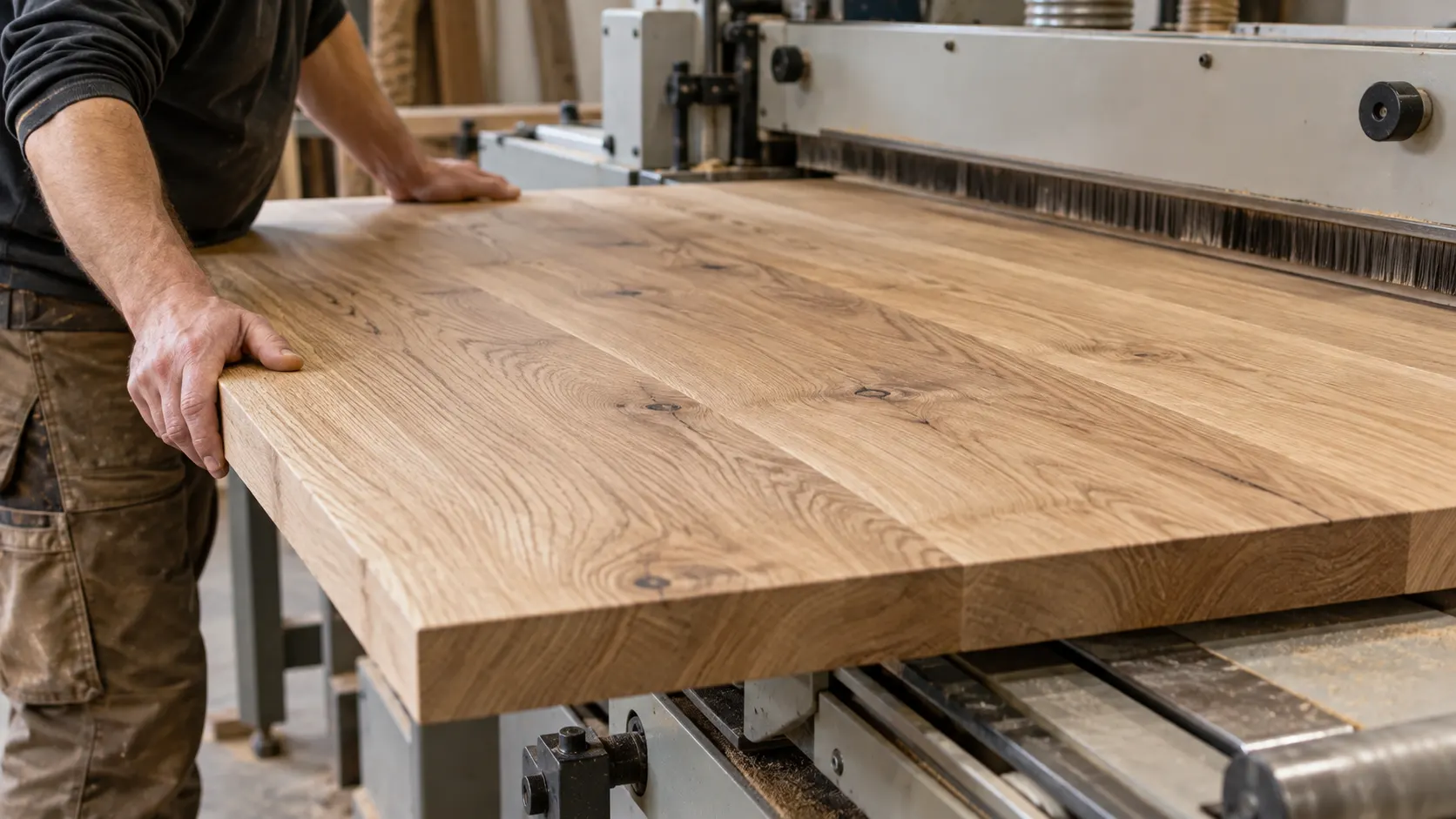
Boards are selected according to colour, grain and visual grade. For wider components such as table tops, several boards are joined into larger panels. The arrangement of these boards affects both appearance and long-term stability, so board selection is not a mechanical step.
5. Panel Joining
Solid wood furniture frequently requires panels wider than a single piece of timber.
Boards are prepared, matched and glued to create stable panels for table tops, cabinet panels, benches, shelves and desktops. Even when dimensions are technically correct, poor grain or colour matching reduces the visual quality of the finished product. Panel joining is a craft step as much as a technical one.
After gluing and curing, the panel is planed and prepared for further machining.
6. CNC Machining
CNC machining allows accurate and repeatable production of complex furniture components.
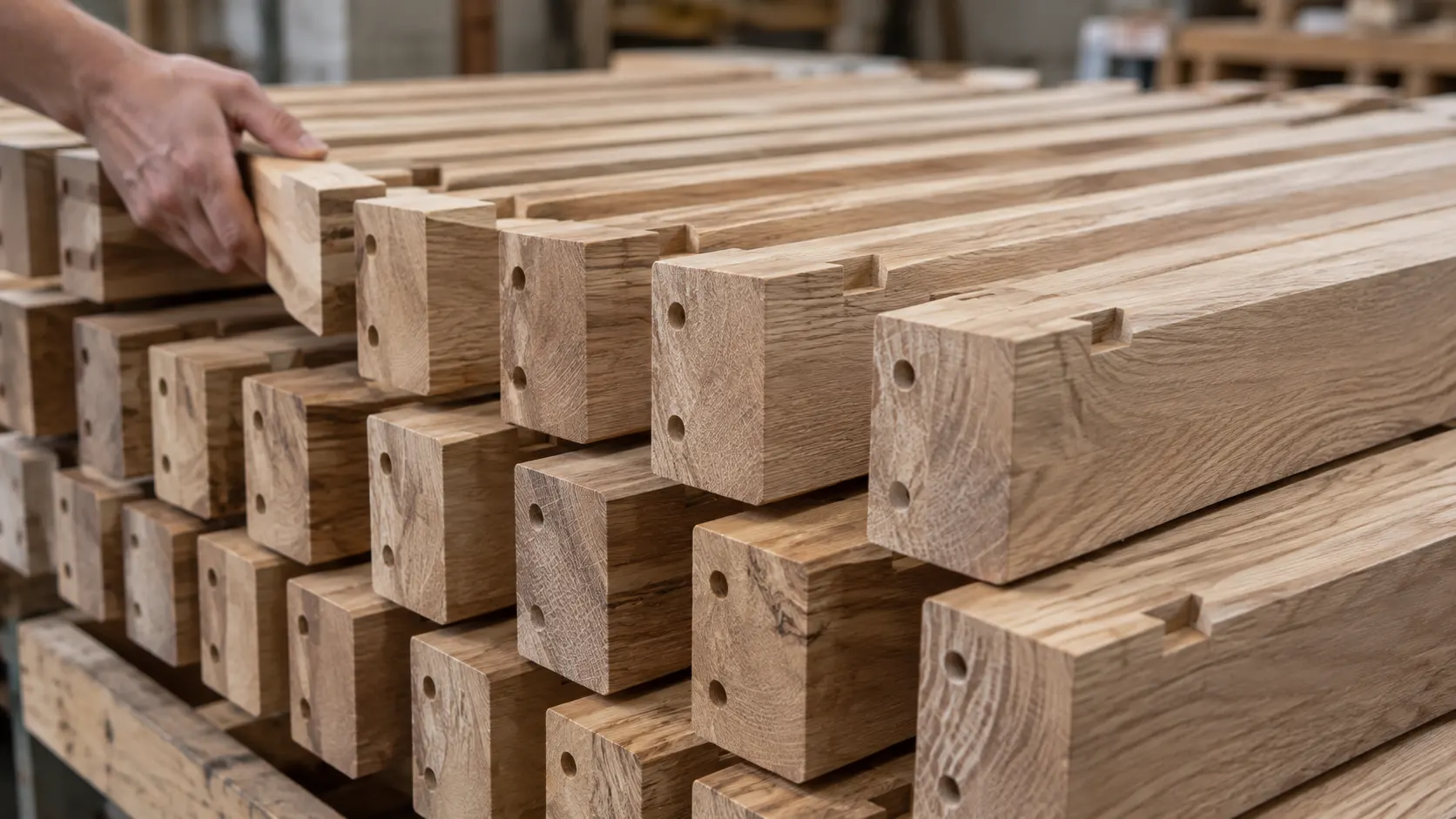
Depending on the project, CNC operations may include cutting to net size, profiling, drilling, grooving, recessing, edge shaping, connection detail machining and hardware preparation. Digital files can be converted into machining operations, but tool diameter, spindle access and clamping strategy must all be considered.
This is why technical review before production matters. For series production, correct CNC programming also improves consistency between batches.
7. Traditional Woodworking and Assembly
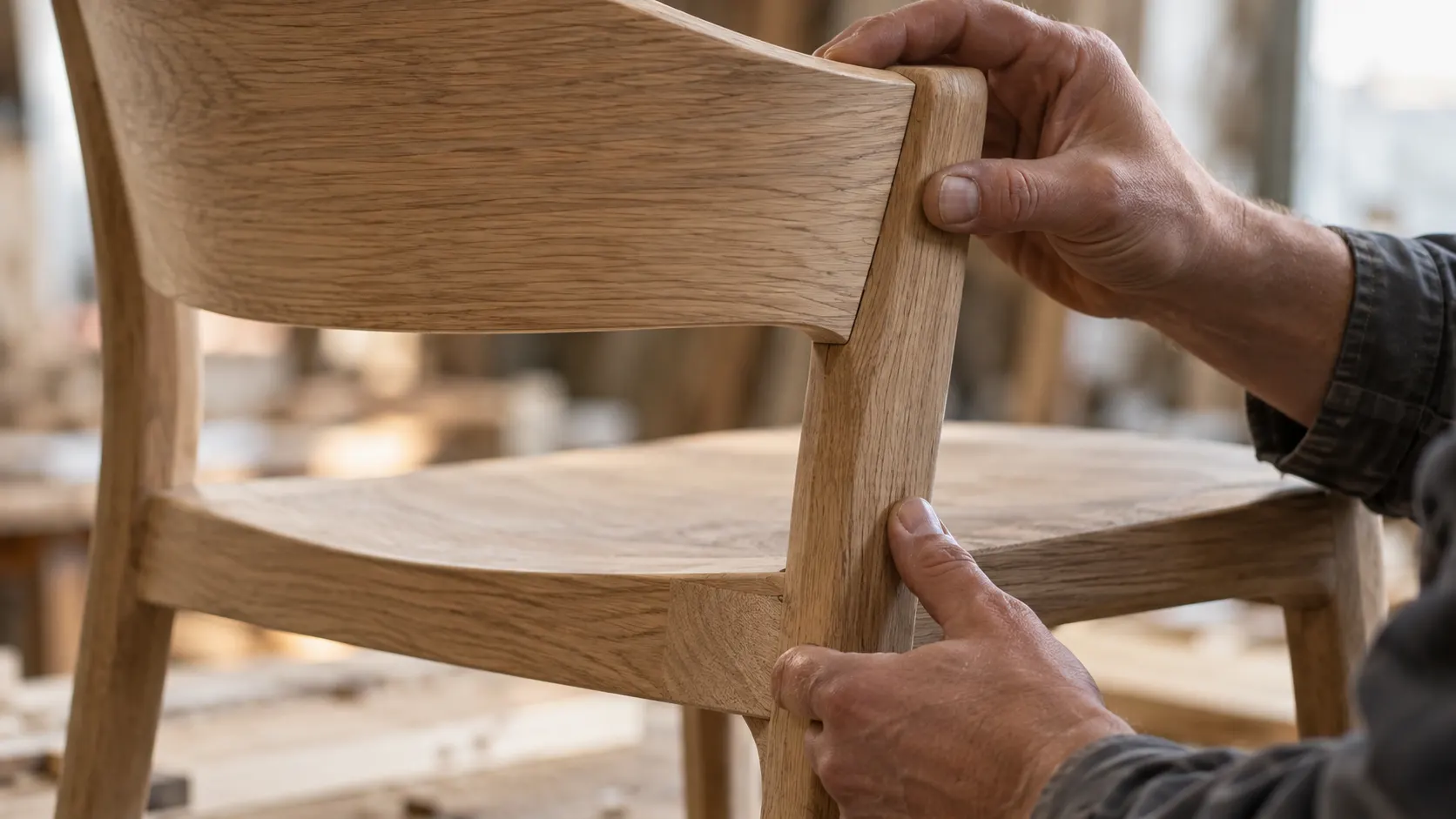
Not every operation is performed by CNC. Furniture production combines digital machining with traditional woodworking processes including mortise and tenon joints, dowel assembly, gluing, clamping, hand fitting and final assembly.
Different products require different construction methods. Tables, chairs and cabinets all have different structural requirements. For products such as chairs or extendable tables, stability testing during prototype development is particularly important before moving to series quantities.
8. Sanding and Surface Preparation
A high-quality finish starts before any oil or lacquer is applied.
The wood surface typically passes through several sanding stages using progressively finer grits. The objective is to create a uniform surface while removing machining marks, glue residue and small imperfections. Edges and profiles are also inspected carefully — inconsistent sanding becomes highly visible after finishing, particularly under raking light or natural daylight.
Surface preparation is one of the stages where time investment has the most visible return.
9. Finishing
The correct finishing system depends on both design intent and intended use.
Common options include natural oil, hardwax oil, clear lacquer, pigmented lacquer, stain and painted finishes. The same wood species can look very different depending on sanding grit, pigment load, oil or lacquer system. For this reason, finish samples are normally useful before production begins.
For larger projects, an approved reference sample helps maintain consistency between production batches — particularly important when orders are split over multiple shipments.
10. Prototype Evaluation
Before larger production quantities are approved, the prototype is evaluated against the specification.
This includes checking dimensions, appearance, stability, joints, hardware, finish quality, functionality, assembly procedure and packaging requirements. If changes are required, drawings can be updated before series production begins. Identifying a design problem at prototype stage is significantly less expensive than identifying it after hundreds of units have already been produced.
11. Series Production
Once the prototype and specifications are approved, production moves into a larger batch.
A production plan is created based on quantities, materials, machining operations, finishing requirements, packaging and delivery schedule. Depending on product complexity and order volume, typical furniture production lead times are approximately six to eight weeks after final specification approval.
12. Quality Control
Quality control occurs throughout production rather than only at the end.
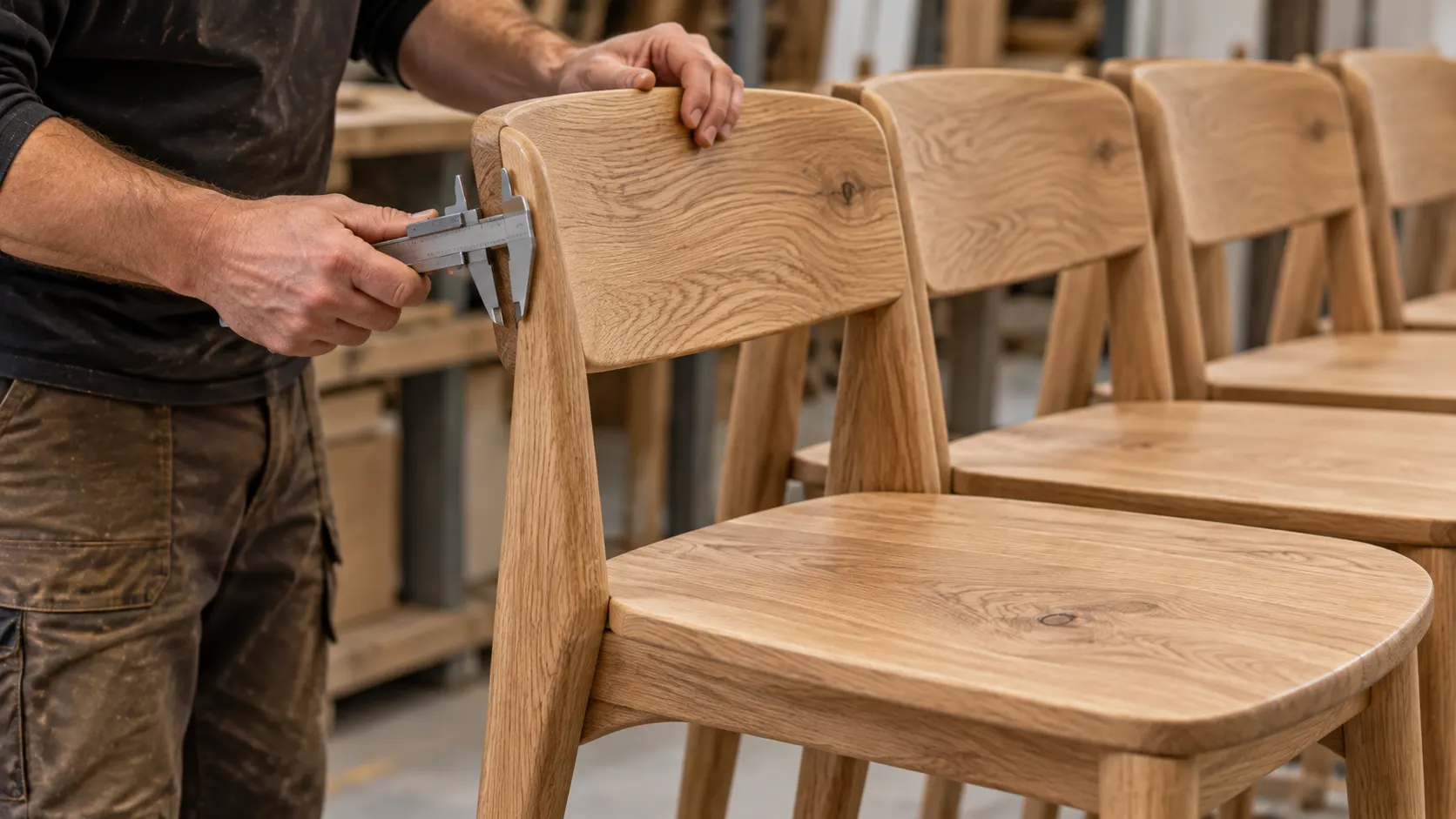
Important checks include material quality at intake, wood moisture, dimensions, machining accuracy, joint quality, structural stability, surface finish, hardware function and final appearance. Before packing, completed furniture is inspected again against the approved specification.
For repeat production, approved samples are retained as references to help maintain consistency between orders.
13. Packaging
Furniture must be protected through the full transport chain.
Packaging depends on the product and destination — typical solutions include cartons, foam inserts, edge protection, protective wrapping, pallets and stretch film. For export shipments, packaging design is particularly important. A product that leaves the factory in perfect condition still needs to survive loading, international transport, unloading and final delivery to the end client.
From Drawing to Production: Frequently Asked Questions
What file formats do you accept for technical drawings?
We can work with PDF, DXF, DWG, STEP and STP files. For initial review, even a detailed sketch or reference photograph with dimensions is a useful starting point. Full production files are required before prototyping begins.
How long does prototype development typically take?
Prototype lead time depends on product complexity. Simple components may be ready in two to three weeks; more complex assemblies with hardware, upholstery or multiple operations may take four to six weeks. We will give a specific timeline after reviewing your drawings.
What is your minimum order quantity for series production?
Minimum quantities vary by product. For solid wood furniture, typical MOQ is 50–100 units per model depending on complexity. For smaller accessories and wooden components, MOQ may be lower. Send us your drawings and we can confirm.
Can you help if the design is not yet production-ready?
Yes. We frequently work with designers and brands who have a clear concept but have not yet resolved the manufacturing details. We can advise on construction method, joint selection, material choice and machining feasibility before prototyping.
Do you handle export packaging and documentation?
Yes. We provide export-grade packaging, palletisation and standard export documentation. We can ship on EXW, FCA or DAP terms depending on your logistics setup.
Successful furniture manufacturing is a combination of design, engineering and production experience. The earlier manufacturing considerations are included in the development process, the easier it becomes to control quality, cost and lead time.
If you have a furniture design you would like to manufacture, send us your drawings and specifications. We can review the project and provide feedback on manufacturability, material selection and production options.
Need a manufacturing partner?
Tell us your product specification and target volume — we reply within 1 business day.
Request a quote →