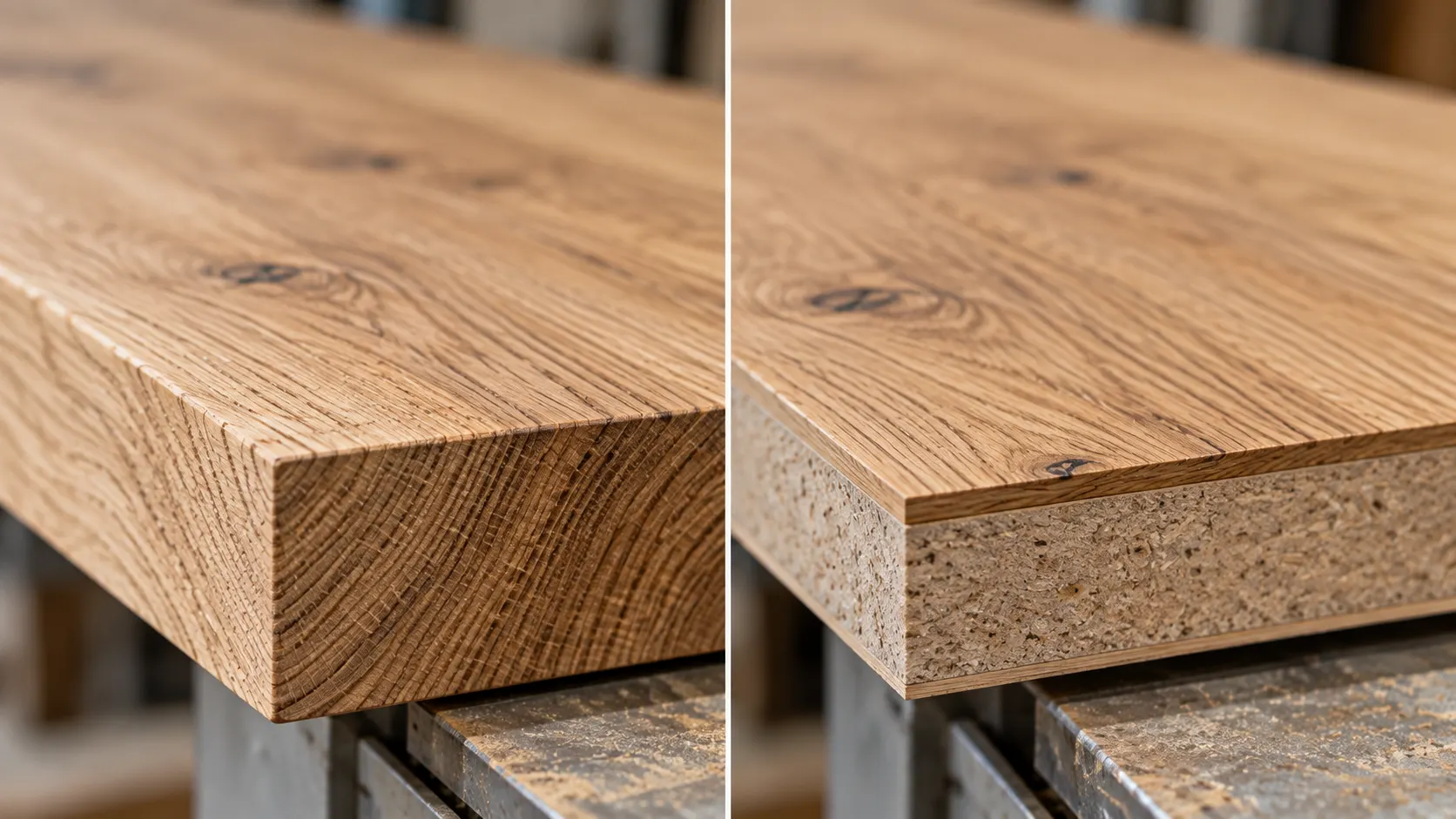
European Oak in Furniture Manufacturing: Properties, Grades and Applications
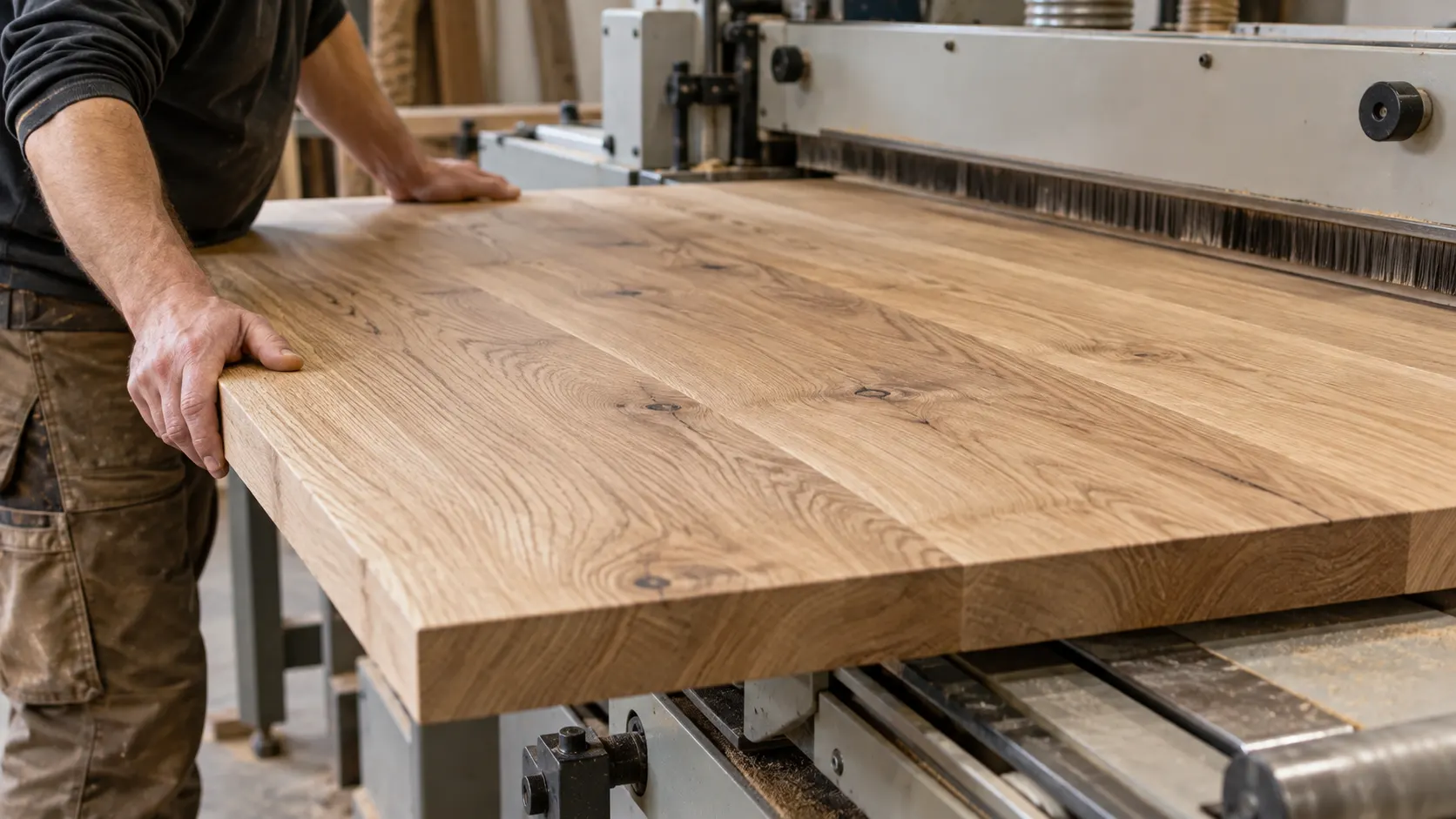
European oak — Quercus robur — is the dominant hardwood in European furniture manufacturing. It is what most people picture when they think of solid wood furniture: pronounced grain, warm tan colour, dense and stable structure.
At BOSA Contract, the majority of what we produce is solid European oak. Understanding the material — its properties, how it is graded, how it behaves in production and in use — is useful for anyone specifying it in a furniture design.
What Makes European Oak Distinctive
European oak has several properties that make it well-suited to furniture production:
Hardness. Oak sits at around 1360 lbf on the Janka hardness scale — harder than ash, softer than beech. It resists surface denting under normal use and holds machined details cleanly.
Grain structure. The grain of Quercus robur is relatively open, with visible medullary rays that produce the characteristic fleck pattern on quartersawn faces. This grain absorbs oil finishes well and responds consistently to staining.
Stability after drying. Properly kiln-dried European oak at 8–10% moisture content is dimensionally stable in typical interior humidity ranges. Movement with seasonal humidity changes is predictable and manageable through appropriate construction.
Machining. Oak machines cleanly with standard tooling. It takes mortise-and-tenon joints, dovetails and through-tenon construction well. It responds to both hand finishing and industrial sanding schedules.
Finish compatibility. Oak accepts hardwax oil, natural oil, water-based lacquer and pigmented finishes. The open grain texture means some finishes require a grain filler for a truly smooth surface.
European Oak vs. Other Common Hardwoods
| Species | Hardness (Janka) | Grain | Typical Use |
|---|---|---|---|
| European oak (Q. robur) | ~1360 lbf | Open, pronounced | Tables, chairs, shelving, case goods |
| American white oak (Q. alba) | ~1350 lbf | Open, finer ray | Similar applications; more uniform grain |
| Ash (Fraxinus excelsior) | ~1320 lbf | Open, strong figure | Chairs, frames, bent components |
| Beech (Fagus sylvatica) | ~1450 lbf | Tight, uniform | Industrial furniture, chair seats, tooling |
| Walnut (Juglans regia) | ~1010 lbf | Closed, fine | Premium furniture, decorative applications |
For contract furniture at scale, European oak and ash are the most practical choices in terms of supply consistency, machining behaviour and price relative to quality. Walnut is used for premium lines or as an accent material.
See our portfolio for examples of solid European oak in production — tables, chairs, benches and storage units at various price points and construction types.
Oak Grading Systems
European oak lumber is graded against standards that describe the appearance of the sawn face — the density of knots, the presence of sapwood, colour variation, and surface defects.
The most commonly referenced grading system for European hardwoods is the NHLA (National Hardwood Lumber Association) system, adapted for European markets, alongside manufacturer-specific specifications. For furniture production, the relevant grades are broadly:
A/B or Prime grade — minimal knots, tight grain, consistent colour. Used for visible faces on premium products.
AB/BC grade — some small sound knots, minor colour variation. Suitable for most contract furniture where a natural, characterful appearance is acceptable.
C grade and below — larger knots, more sapwood, greater variation. Used for structural components where appearance is less critical, or in rustic/character-grade products.
For clients specifying oak furniture, it is important to align on grade expectations before production. What a manufacturer calls “character grade” may differ significantly from what a designer expects. We recommend requesting material samples or reference photographs before approving a specification.
Sapwood and Colour Variation
One topic that generates discussion between designers and manufacturers is sapwood — the lighter, yellowish wood at the outer edge of the log that has not yet converted to heartwood.
In strict grading, sapwood is typically excluded from visible faces. In character-grade or natural-appearance specifications, some sapwood may be acceptable.
European oak also shows natural colour variation within a single batch: boards from the same log may range from pale tan to golden brown. This is a feature of the material, not a defect, but it affects how a finished piece looks, particularly on large tabletops assembled from multiple boards.
For clients who want tightly matched colour across a production run, this is worth discussing explicitly — it affects which boards can be used and therefore affects yield and cost.
Drying and Moisture Content
The most common cause of problems with solid wood furniture in production — and in use — is incorrect moisture content.
Oak used for furniture should be kiln-dried to 8–10% moisture content for Central and Northern European interior conditions (typically 40–60% relative humidity). Wood delivered or stored at higher moisture content will shrink after production, potentially causing cracks, joint opening or warping in finished pieces.
At BOSA, we kiln-dry all solid oak components to the correct target range before machining. Moisture content is checked at intake and at key stages of production. This is not optional: it is the foundation of consistent product quality.
For clients ordering from overseas manufacturers without visibility into drying practices, this is worth asking about specifically. Ask for the target moisture content and how it is measured.
Smoked and Pigmented Oak
In addition to natural European oak, smoked and pigmented finishes are widely specified in contemporary contract furniture.
Smoked oak is produced by exposing kiln-dried oak to ammonia vapour, which reacts with the tannins in the wood to produce a grey-brown tone. The result is more consistent than grey staining because it works through the grain structure rather than sitting on the surface. Smoked oak is used in our Oak Angled-Leg Dining Table and other pieces where a cooler, more contemporary finish is required.
Pigmented oils and lacquers allow a wider colour range while preserving the grain texture. A white-pigmented oil, for example, reads as white from a distance but shows the grain on close inspection — a popular finish for Scandinavian market furniture.
Both approaches are available at BOSA as standard finish options.
Sustainability and FSC Certification
Bosnia and Herzegovina has one of the highest forest coverage rates in Europe, at approximately 53% of land area. European oak sourced from managed Bosnian forests is a materially transparent choice: short supply chains, documented origin, and forest management under FSC standards.
All timber we use is FSC 100% certified. For brands making sustainability claims to their customers or retailers, we provide full chain-of-custody documentation as standard.
If you are developing a furniture line in European oak and want to discuss production, contact us or view our portfolio to see examples of what we manufacture.
Need a manufacturing partner?
Tell us your product specification and target volume — we reply within 1 business day.
Request a quote →